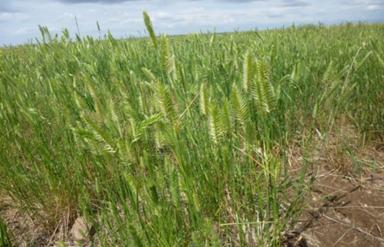
Breeding Achievements
CATTLE
Alatau Breed of Cattle
Authors of the breed: Pak D.N., Chernov G.A., Boldyrev M.T., Rysbekov P.I., Martinson M.Ya., and others.
With the participation of scientists from the Kazakh Research Institute of Animal Husbandry, the Kyrgyz Research Institute of Animal Husbandry, the All-Union Research Institute of Animal Husbandry, and the Almaty Zooveterinary Institute, the first domestic breed of dairy-and-beef productivity — the Alatau breed — was developed on the basis of crossing Kazakh and Kyrgyz cattle with Kostroma and Brown Swiss breeding bulls and was approved in 1950.
Work on the development of the Alatau breed was carried out from 1930 to 1950 in the Kyrgyz SSR and in the southern regions of the Kazakh SSR. The breed is adapted to foothill and high-mountain areas. Its coat color is mainly brown, with various shades. The live weight of bulls is 850–1000 kg, and that of cows is 500–600 kg. The daily weight gain of young bulls during fattening is 800–900 g, and the slaughter yield is 53–60%. The meat is of good quality. Milk yield is 4000–4500 kg per year. Milk fat content is 3.8–4.06%.
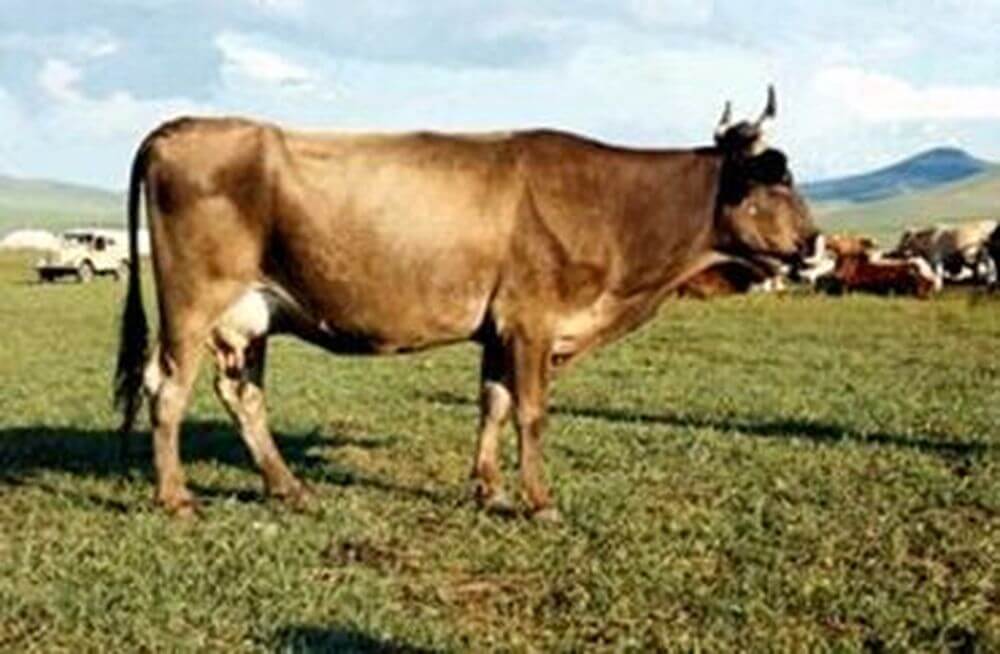
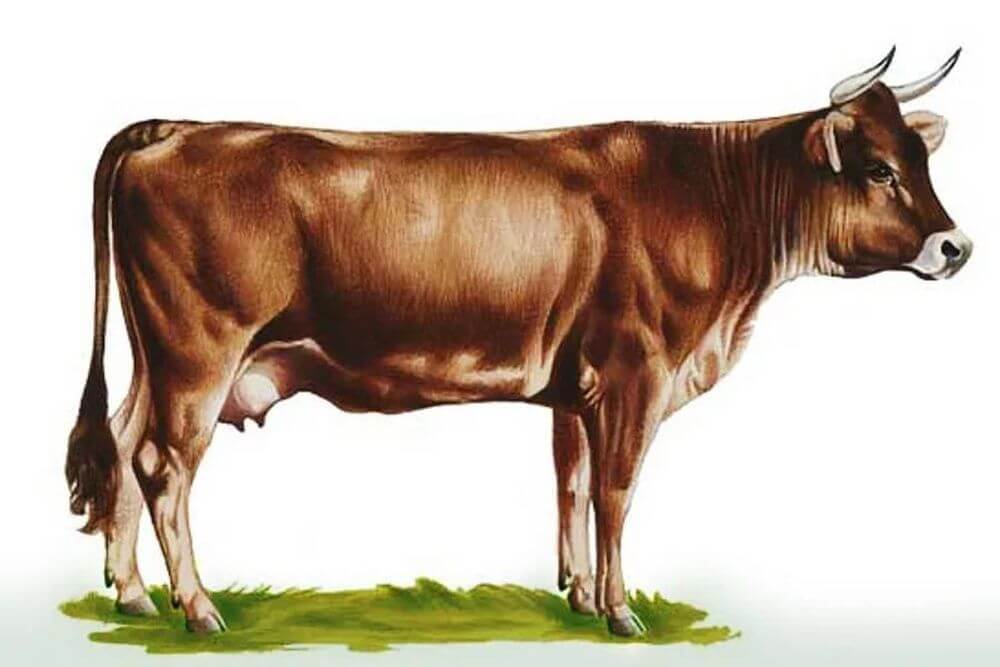
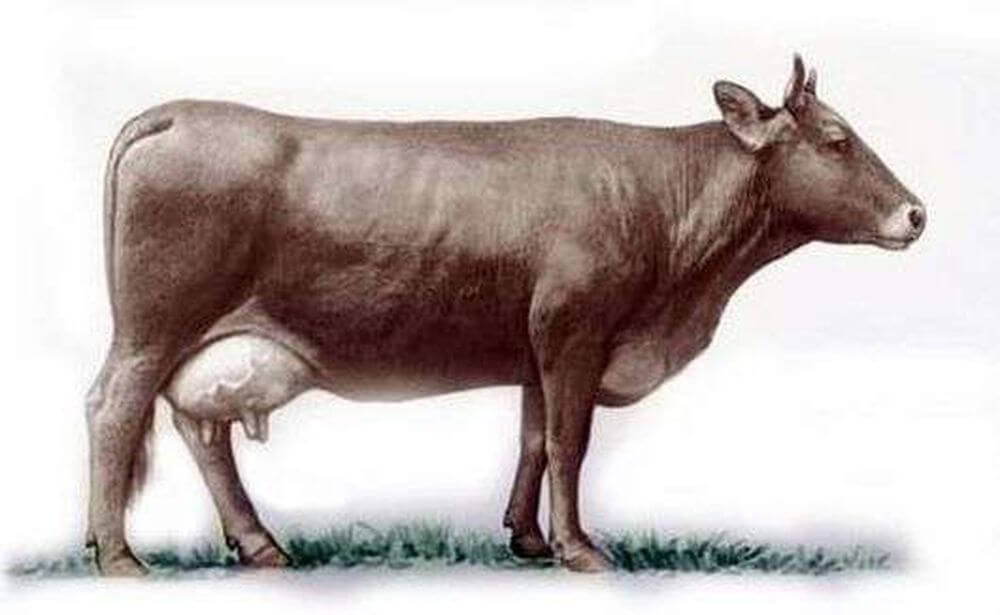
Aulie-Ata Breed of Cattle
Authors of the breed: Panasenko A.G., Yesyutin G.P., Vlasova A.P., Tavildarova T.F. and others.
Aulie-Ata cattle of dairy productivity was developed in the Kyrgyz and Kazakh SSR by crossing local cattle with Dutch bulls and subsequent breeding of crossbreeds "in themselves". It was developed in the period 1935–1952. Scientists-breeders from the Kazakh Research Institute of Animal Husbandry, Kyrgyz Research Institute of Animal Husbandry, All-Union Research Institute of Animal Husbandry, and Almaty Zooveterinary Institute participated in developing the new breed. The period of final formation of the Aulie-Ata cattle as an independent breed fell on 1935–1950, and from 1952, by decision of the Soviet and party authorities of the USSR, it was included alongside other breeds in breed zoning plans and other normative-recommendatory documents on animal husbandry. However, the Aulie-Ata breed was officially approved much later, by Order No. 199 of the Ministry of Agriculture of the USSR dated May 6, 1974.
A distinctive feature of the breed is its adaptability to breeding in hot climate conditions and resistance to blood-parasitic diseases. The coat is predominantly black-and-white, light gray is also found. The live weight of breeding bulls is 700–800 kg, maximum up to 1000 kg; of cows — 400–450 kg. The average milk yield of cows is 2500–3200 kg, milk fat content is 3.7–3.8%.
In the forties and fifties of the last century, under the leadership and direct participation of Institute scientists, a dairy cattle population was created in the northern regions of Kazakhstan based on the Red Steppe breed, which was subsequently successfully worked with by the North Kazakhstan Research Institute of Animal Husbandry team. Thus, in the farms of North Kazakhstan, Aktobe, Pavlodar, and some districts of Akmola and Karaganda regions, they began to actively breed Red Steppe and Brown Latvian dairy cattle breeds.
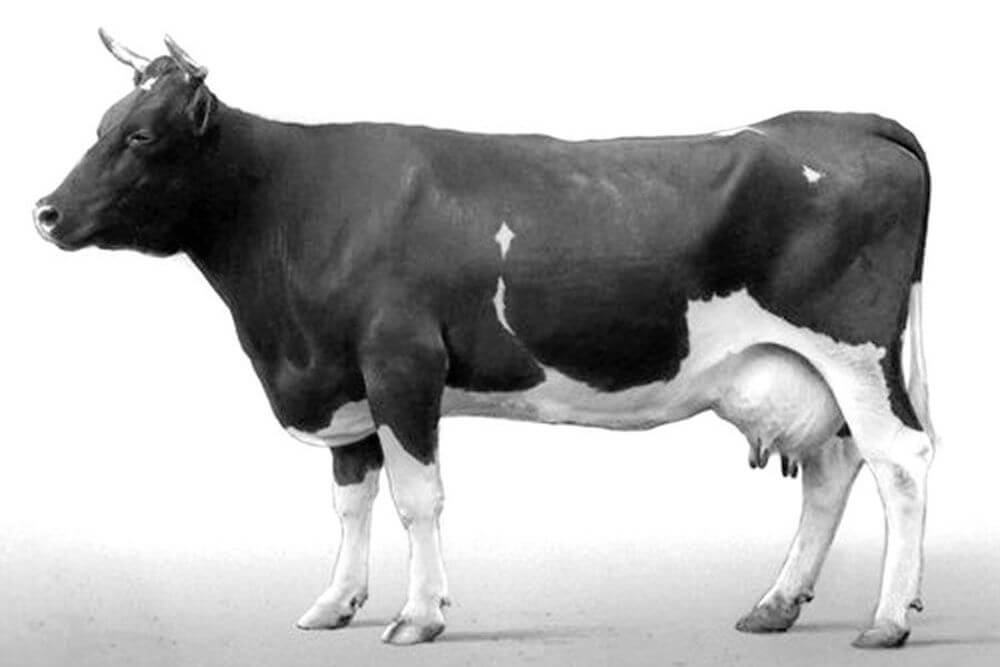
Kazakh Type of Brown Dairy Cattle "Akyrys"
Authors of the breed: Sulenov Zh., Torekhanov A.A., Abdraimov M.T., Zhuyriktaev K.B., Vypritsky S.N., Karamshuk I.T., Kolokoltsev Yu.K., Kusainov K.K., Meldebekov A.M., Tadzhiev K.P., Chizhegov V.P.). Patent No. 48 dated 12.07.2007.
Created and approved on the basis of the Alatau breed through reproductive crossing and improvement with Brown Swiss breeding bulls of American selection. Official work on crossing Alatau cattle with Brown Swiss bulls of American selection began in 1975 by assignment of the USSR State Committee for Science and Technology, and subsequently received additional support by the order of the Ministry of Agriculture of the Kazakh SSR and the decision of the All-Union Academy of Agricultural Sciences in 1982.
The new type differs from the base Alatau breed by high milk productivity, dairy-type conformation with strong constitution, ease of calving obtained from the improving breed, and resistance to harsh climate, high adaptability and acclimatization ability inherited from Kazakh cattle. The coat is brown, of various shades. The udder is mainly cup- and bath-shaped with evenly developed quarters.
The live weight of cows is 500–550 kg or more, calves at birth weigh 35–38 kg. By 18 months of age, young stock reaches a weight of 350-400 kg, and fattened bulls – 450-500 kg. Slaughter yield ranges from 50 to 60% depending on the age and fatness of the animals.
Milk productivity is high, no less than that of cows of specialized dairy breeds.
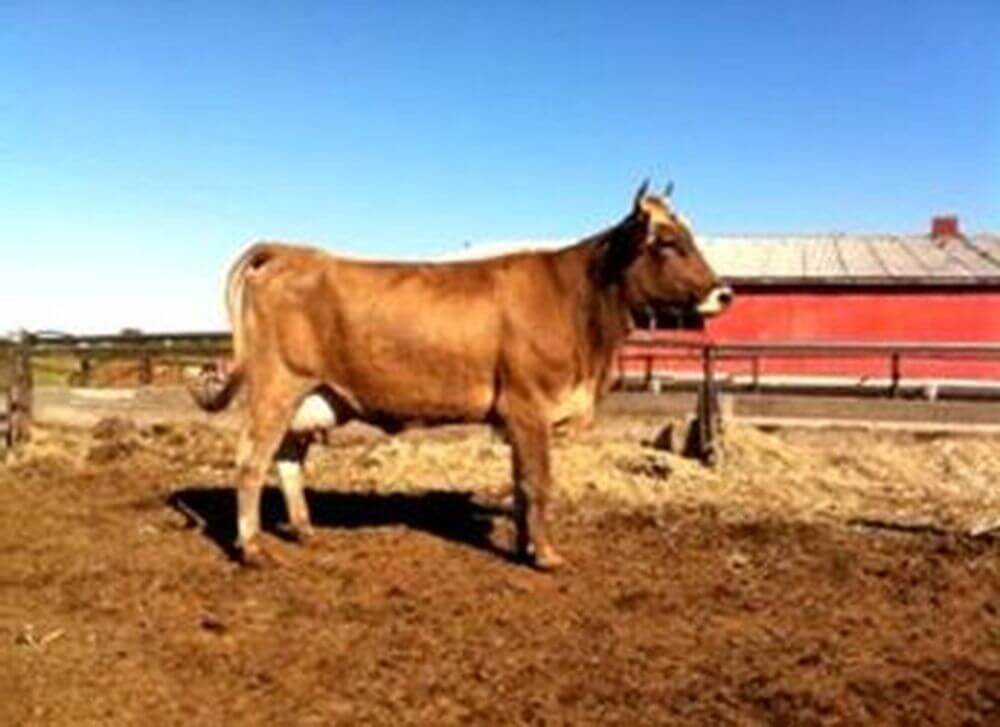
Kazakh Red-and-White Dairy Type "Ertis" of Simmental Cattle
Authors of the breed: Kolokoltsev Yu.K., Akulov V.I., Zhazylbekov N.A., Zaitenov E.A., Kuzmenko P.P., Kineev M.A., Meldebekov A.M., Otarov K.M., Platunova V.I., Plevako N.I., Satygul S.Sh., Sulenov Zh.S., Tadzhiev K.P., Torekhanov A.A., Yusupov A.K. Patent No. 59 dated 25.05.2009.
In accordance with the Resolution of the Central Committee of the Communist Party of Kazakhstan and the Council of Ministers of the Kazakh SSR No. 39 dated 03.02.1987, orders of the Ministry of Agriculture of the Kazakh SSR No. 259/86 dated 09.04.1982 and the All-Union Academy of Agricultural Sciences No. 338/56 dated 10.05.1983, large-scale work was launched in the Simmental breeding zone for qualitative transformation of the Kazakhstan population of this breed in the direction of increasing milk productivity and improving the morpho-functional properties of the udder, using imported bulls of intensive dairy breeds in crossing: Red-and-White Holstein, Montbeliard, Red-and-White German, and partially Ayrshire.
On the basis of complex reproductive crossing, in 2009 in the northeast of Kazakhstan, the new Kazakh Red-and-White Dairy type "Ertis" was approved.
Cows of the new type have a pronounced dairy type, less developed musculature compared to the original Simmental breed. The udder is voluminous and wide, mainly cup- and bath-shaped. The coat is red-and-white, with various shades.
The live weight of heifers at breeding age reaches 340–380 kg, after the first calving 450–480 kg. The weight of full-age cows is 525–560 kg. The slaughter yield of bulls at 15 months is 55–58%, at a live weight of 400 kg.
The average milk yield across all breeding herds is 5,003 kg of milk for 305 days of lactation with a fat content of 3.79%. In the selection group, these indicators are 6,115 kg for milk yield, 3.81% for fat content, ranging from 5,000 to 7,652 kg and 3.78–3.84% respectively. Milk flow intensity is in the range of 1.80–1.87 kg/min.
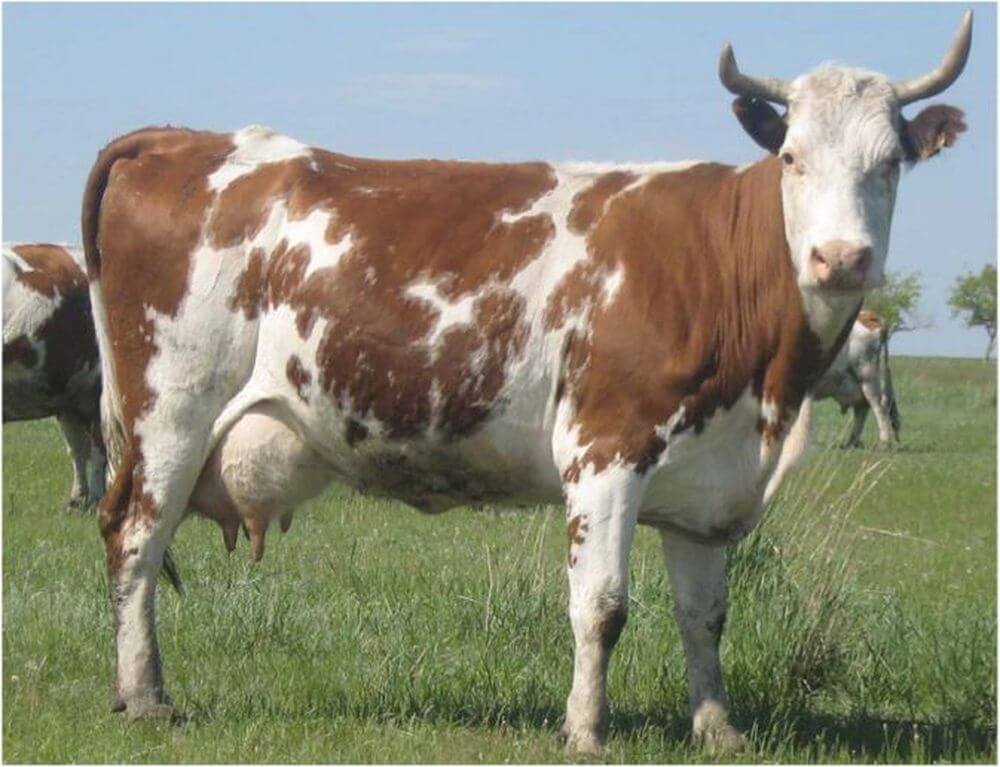
Kazakh Southern Type "Sairam" of the Black-and-White Cattle Breed
Authors of the breed: Dalenov Sh.D., Yusupov A.K., Abdullaev K.Sh., Azimov F.S., Aksennikova A.D., Alentaev A.S., Eraliev A., Ongarbaev T.O., Satygul S.Sh., Sulenov Zh.S., Tadzhiev K.P., Toktagunov A.T., Torekhanov A.A., Ibrashev K.B., Kineev M.A., Kolokoltsev Yu.K., Mavlanov R. Patent No. 370 dated 23.07.2013.
The new type was created on the basis of reproductive crossing of adapted Black-and-White and domestic Aulie-Ata breed cows with breeding bulls of Dutch, German, and Holstein Black-and-White breeds. The breeding area of the new type is the South and Southeast of Kazakhstan.
Animals of the new type have a dairy-type conformation, strong constitution, a voluminous and wide udder of cup- and bath-shaped form with evenly developed quarters. They demonstrate a sufficiently long productive lifespan, are resistant to hot climate, and possess excellent thermoregulation. Compared to related breeds from distant foreign countries, the new type of Black-and-White cattle features good reproductive functions and ease of calving.
The live weight of heifers of the new type at birth ranges from 32 to 35 kg, of bull calves from 35 to 38 kg; at 12 months the young stock reaches a weight of 250-276 kg, and at breeding age 342-376 kg. Full-age cows weigh 520-540 kg.
The productivity of cows in the herds of base farms is in the range of 4,500–5,000, and in the breeding group 6,800–7,500 kg of milk, with a fat content of 3.70–3.80%. Milk flow intensity is 1.6-1.8 kg/min. Per 1 kg of milk at natural fat content, 1.04 feed units are expended.
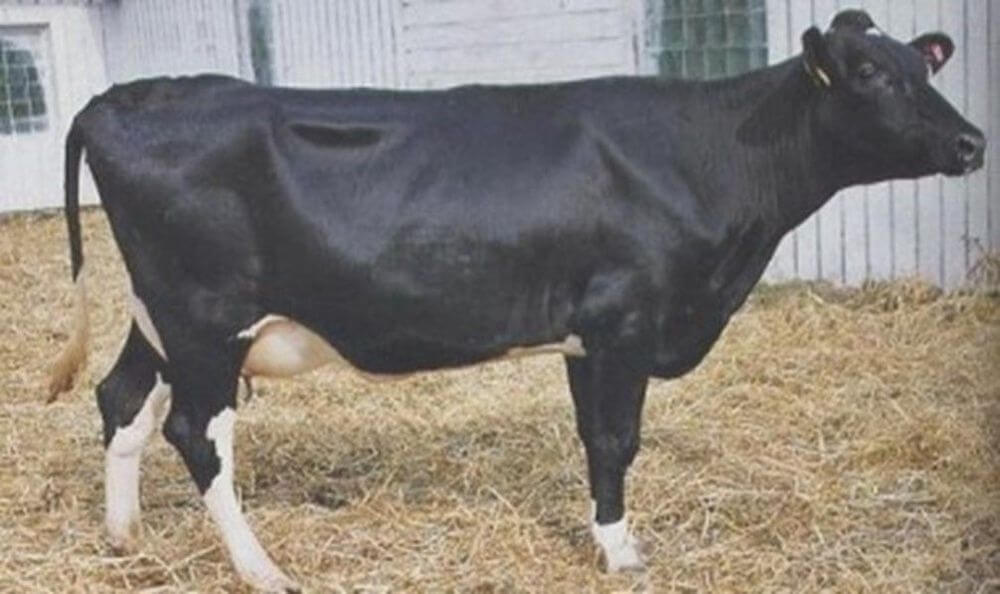
Zonal Type "Zhetisu" of Santa Gertrudis Beef Cattle
Authors of the breed: Bezrukov N.I., Zhumabaev M.Zh., Meldebekov A.M., Chindaliev E.A., Nazarbekov B.K., Zhuzhenov Sh.A. and others.
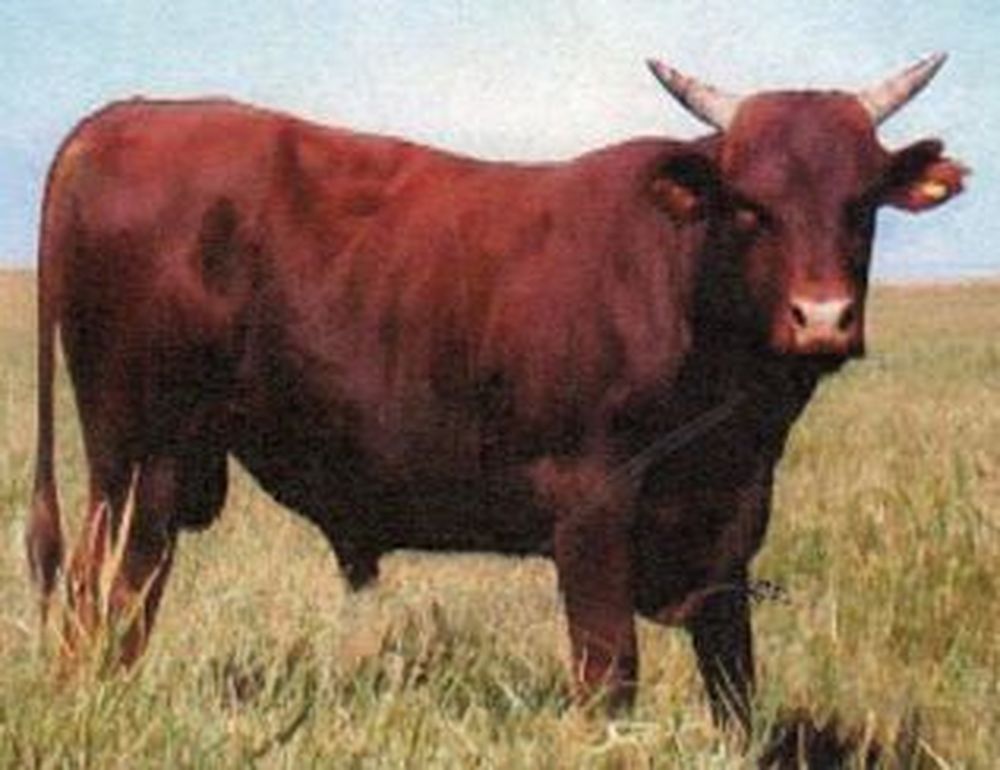
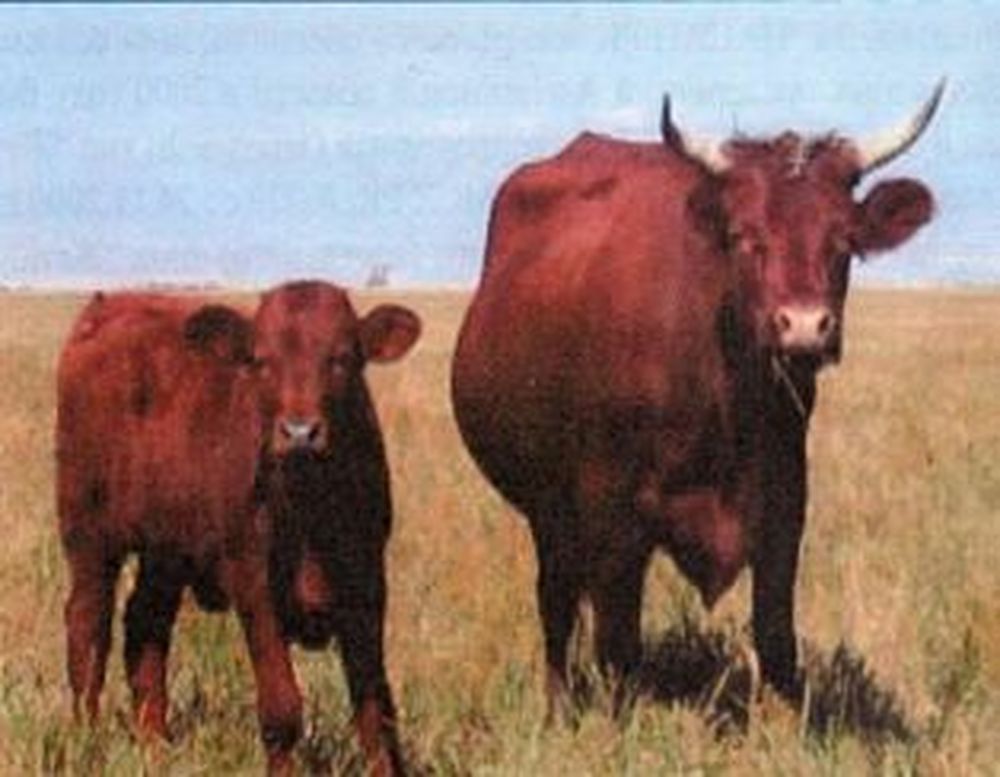
As a result of long-term targeted selection and breeding work in Almaty region, in 2000, a new intrabreed (zonal) type "Zhetisu" of the Santa Gertrudis breed was created and approved.
In creating the new type "Zhetisu", the method of reproductive crossing and breeding "in themselves" of 7/8 and 13/16 blood Santa Gertrudis crossbreeds with local improved cattle (crosses of local cattle with Alatau and Kazakh White-Headed breeds) was used.
The beef type "Zhetisu" well combines the positive qualities of the original breeds. The "Zhetisu" type inherited from Santa Gertrudis animals high growth energy, adaptability to hot climate, skeletal strength and resistance to blood-parasitic diseases, from local cattle — adaptability to the harsh continental climatic conditions of the southeast of the republic and good reproductive ability.
Factory Line Maket 6527 of the Kazakh White-Headed Beef Cattle Breed
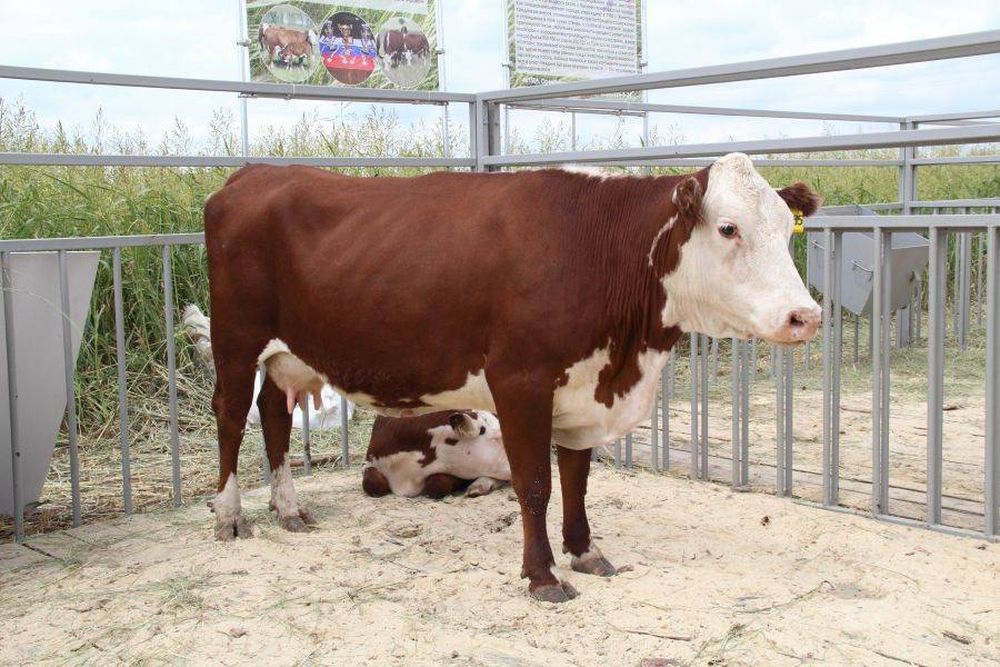
Authors of the breed: Kryuchkov V.D., Zhuzhenov Sh.A., Ozherelev V.F., Zhumanbai A.K., Tamarovsky M.V., Shaiymov A.B., Abzhanov R.K., Umarov K.T., Kazhiev S.K., Seitmuratov A.E., Kozhemzharov E.S., Zhusupov M.Zh. Patent No. 371 dated 23.07.2013.
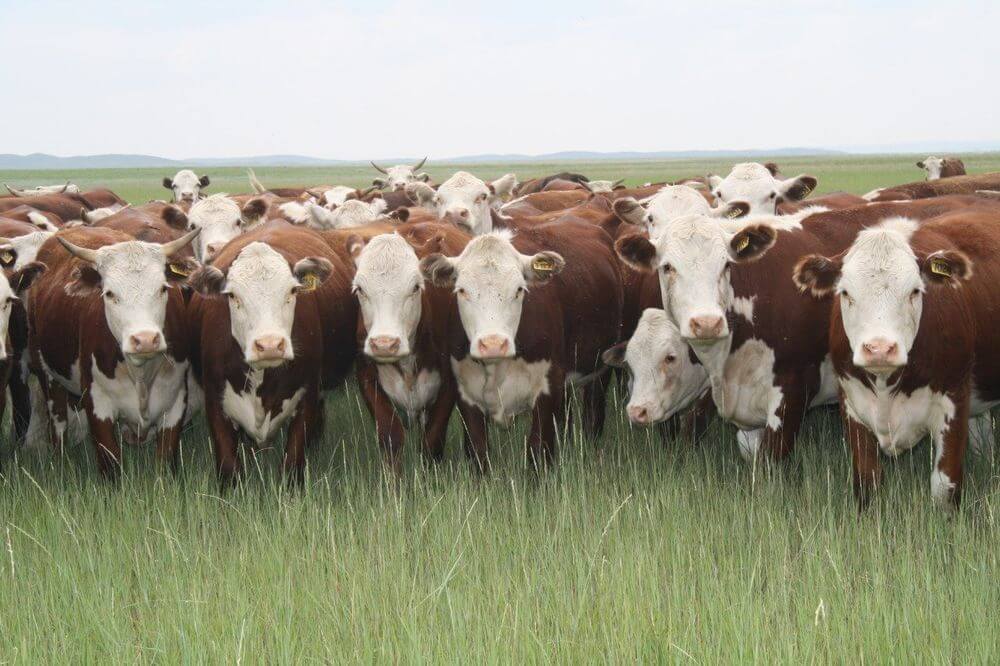
The factory line of Maket 6527 of the Kazakh White-Headed breed is positively distinguishable from non-linear analogues by the growth intensity of young stock and feed conversion efficiency, which are well inherited in offspring. They also surpass peers by phenotypic indicators and cow milkiness: live weight of bulls at 5 years and older is 890 kg, cows — 529 kg, milkiness (calf weight at 6 months) — 189 kg.
Linear animals, descendants of Maket, by selectable traits of growth intensity (994 g) and feed conversion (7.0), exceed analogues of breeding herds of originator farms by 8.6 and 7.9%, and the breed standard by 36.2 and 28.6%. The excess of other trait indicators over analogues of breeding herds and the breed standard is: by weight of bulls at 15 months (419.5 kg) – 4.0 and 14.9%, by meat evaluation – 1.1 and 4.8%, by cow weight – 1.9 and 1.6%, and their milkiness by 4.1 and 14.6%.
Factory Line Mikron 6191 of the Kazakh White-Headed Beef Cattle Breed
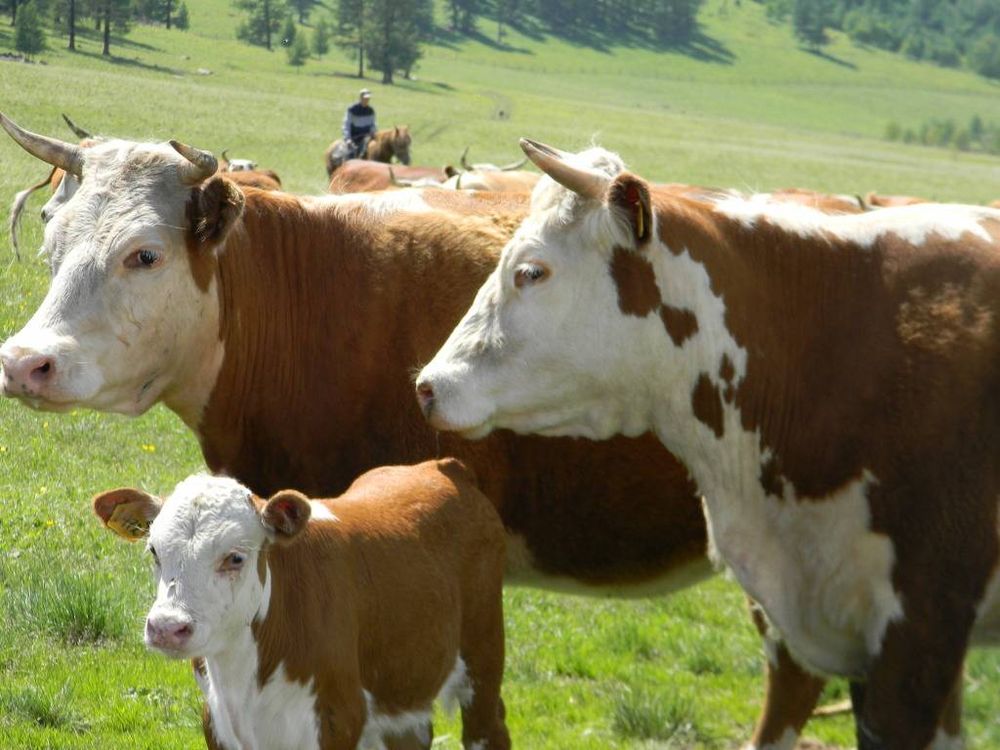
Authors of the breed: Zhuzenov Sh.A., Kryuchkov V.D., Torekhanov A.A., Tadzhiev K.P., Tamarovsky M.V., Zhumanbay A.K., Ozherelyev V.F., Shayymov A.B., Abzhanov R.K., Baizhanov A.S., Dokayev Sh.A., Sadykova L.U., Sudibor V.N., Kozhemzharov E.S., Muskhanov Zh.V. Patent No. 372 dated July 23, 2013.
The Mikron 6191 factory line of the Kazakh White-Headed breed is positively distinguished from non-line analogues by the growth intensity of young stock and the return on feed in terms of weight gain, which are well inherited by the offspring. The animals also surpass their male and female peers in phenotypic indicators and in the milk performance of cows: the live weight of bulls aged 5 years and older is 933 kg, that of cows is 520 kg, and milk performance, expressed as the weight of calves at 6 months of age, is 191 kg.
This line is distinguished by high growth intensity: the average daily gain from 8 to 15 months of age is 1024 g. By 18 months of age, it reached a live weight of 523 kg, and by 4 years of age, 870 kg, classified as “elite-record”, with a constitution and exterior score of 92 points. The valuable qualities of the founder were well inherited by its offspring. When evaluating its genotype, the following results were obtained: average weight of young bulls at 15 months — 452 kg, average daily gain from 8 to 15 months — 958 g, feed costs — 7.0 feed units, meatiness score — 55 points.
Factory Line Adonis 3410 of the Kazakh White-Headed Beef Cattle Breed
Authors of the breed: Zhuzenov Sh.A., Kryuchkov V.D., Torekhanov A.A., Tadzhiev K.P., Ozherelyev V.F., Zhumanbay A.K., Shayymov A.B., Abzhanov R.K., Baizhanov A.S., Dokayev Sh.A., Sadykova L.U., Sudibor V.N., Mukushev T.K., Kospayev G.K., Seitmuratov A.E., Muskhanov Zh.V. Patent No. 373 dated July 23, 2013.
The Adonis 3410 factory line of the Kazakh White-Headed breed is positively distinguished from non-line analogues by the growth intensity of young stock and the return on feed in terms of weight gain, which are well inherited by the offspring. The animals also surpass their male and female peers in phenotypic indicators and in the milk performance of cows: the live weight of bulls aged 5 years and older is 924 kg, that of cows is 535 kg, and milk performance, expressed as the weight of calves at 6 months of age, is 190 kg.
The main traits for which the Adonis line was selected are growth intensity and feed conversion. Animals of the Adonis line, according to these traits — 1005 g and 7.1 feed units, respectively — exceed analogues from the breeding herds of the originator farms by 7.4% and 6.4%, respectively, and exceed the breed standard by 37.6% and 36.7%. The excess of indicators for other traits over analogues from breeding herds and over the breed standard is as follows: weight of young bulls at 15 months — 420.6 kg — by 3.7% and 15.2%, respectively; meatiness score — by 1.7% and 5.0%; weight of cows — by 2.4% and 2.8%; and their milk performance — by 5.4–14.8%.
Factory Line "Zenit–Chubaty 1165 AULK-66" of the Auliekol Beef Cattle Breed
Authors of the breed: Kryuchkov V.D., Abzhanov R.K., Danilenko O.V., Zhanburshinov Z.A., Zhanburshinov B.Z., Zhuzenov Sh.A., Zhumanbay A.K., Zhusupov M.Zh., Meldebekov A.M., Satygul S.Sh., Smagulov A.K., Suleimenova B.M., Torekhanov A.A., Tursunov M.Zh. Patent No. 55 dated July 12, 2005.
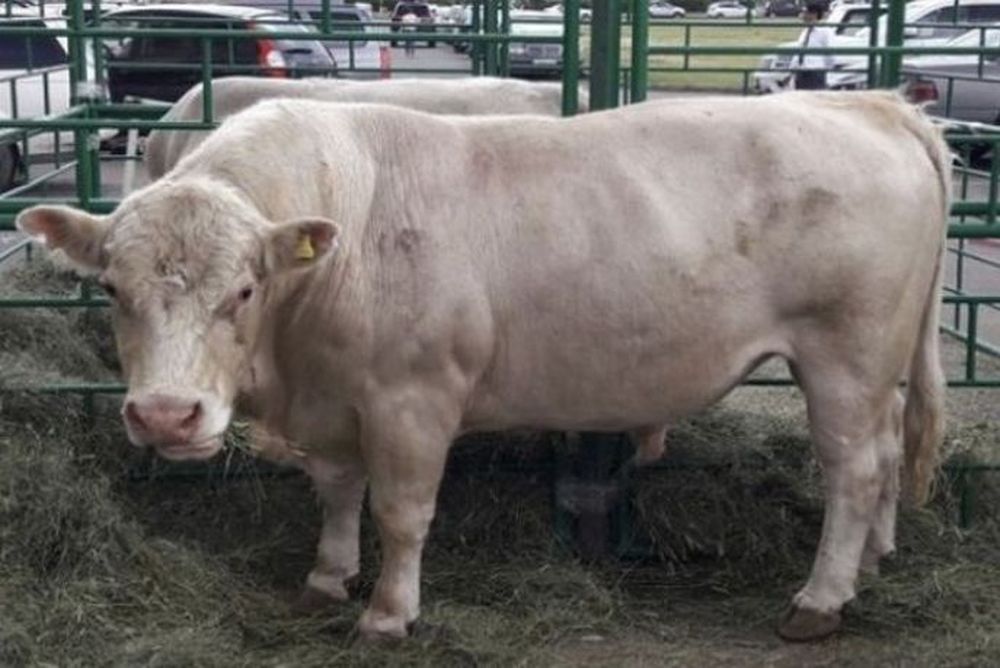
The Zenit–Chubaty 1165 factory line was formed on the basis of the genealogical line of the bull Amur 1177, among whose descendants outstanding animals became the founders of an independent structural unit of the breed. By the age of four, Zenit 1060 reached a live weight of 885 kg, while his son Chubaty 1165 reached 1020 kg; based on their own productivity, they were assessed as belonging to the highest class.
The animals are characterized by high growth intensity inherited through generations of descendants: the average daily weight gain of young bulls from 8 to 15 months of age is 1026 g, which is 9.4% higher than that of unrelated peers and 36.8% higher than the breed standard; they consume 4.2% less feed per unit of weight gain; by 15 months of age, they reach an average weight of 429.7 kg, exceeding analogues by 18.5 kg, or 4.5%, and the breed standard by 54.7 kg, or 14.6%.
Factory Line "Tabakur 1350 AULK-66" of the Auliekol Beef Cattle Breed
Authors of the breed: Kryuchkov V.D., Danilenko O.V., Zhanburshinov Z.A., Zhanburshinov B.Z., Zhuzenov Sh.A., Zhumanbay A.K., Zhusupov M.Zh., Kanapyanov K.A., Kineev M.A., Meldebekov A.M., Musin T.I., Satygul S.Sh., Torekhanov A.A., Shukenov Kh.D. Patent No. 56 dated July 12, 2007.
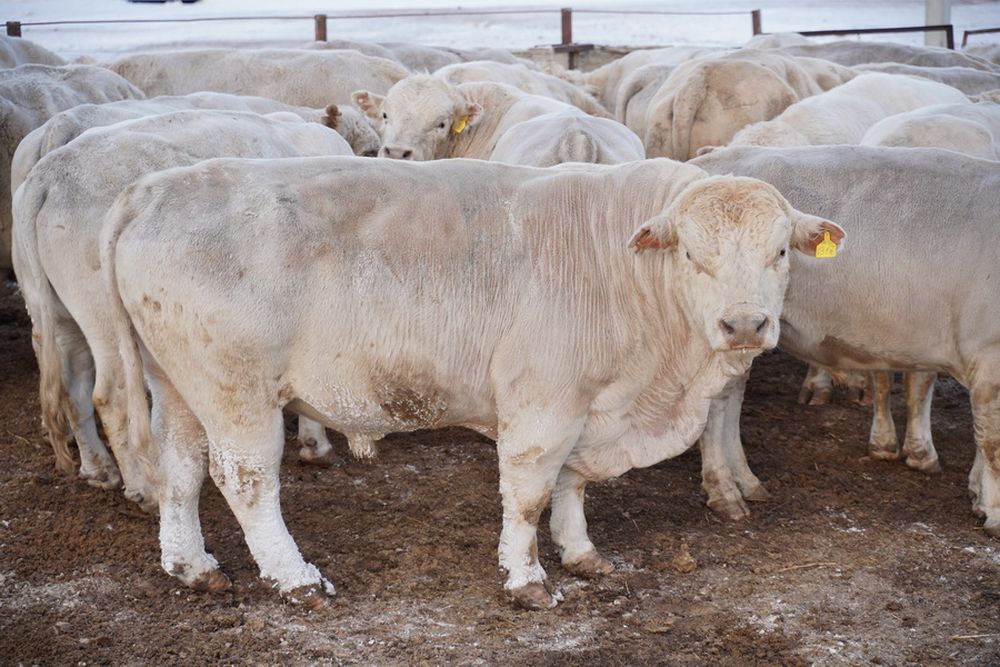
The Tabakur 1350 factory line was created by the method of intrabreed selection and is enriched with animals outstanding in terms of phenotype and genotype. Selection was aimed at consolidating and developing the positive qualities of the founder through homogeneous mating under optimal management technology and feeding levels.
For the first time under the conditions of the steppe zone of Northern Kazakhstan and Kostanay Region, a new factory line of the Auliekol breed was created, successfully combining early maturity, high growth intensity, and efficient feed utilization. The average daily weight gain of young bulls from 8 to 15 months of age is 1032 g, which is 10% higher than that of unrelated peers and 37.6% higher than the breed standard. By 15 months of age, the live weight reaches 431 kg, exceeding peers by 19.9 kg, or 4.8%, and the breed standard by 56 kg, or 14.9%.
Horse Breeding
Kushum Horse Breed of Meat-and-Dairy Productivity
Authors of the breed: Barmintsev Yu.N., Borisov M.N., Belyayev A.I., Rzabayev S.S., Nurgaliyev A.N., Gubashev B.I., and others.
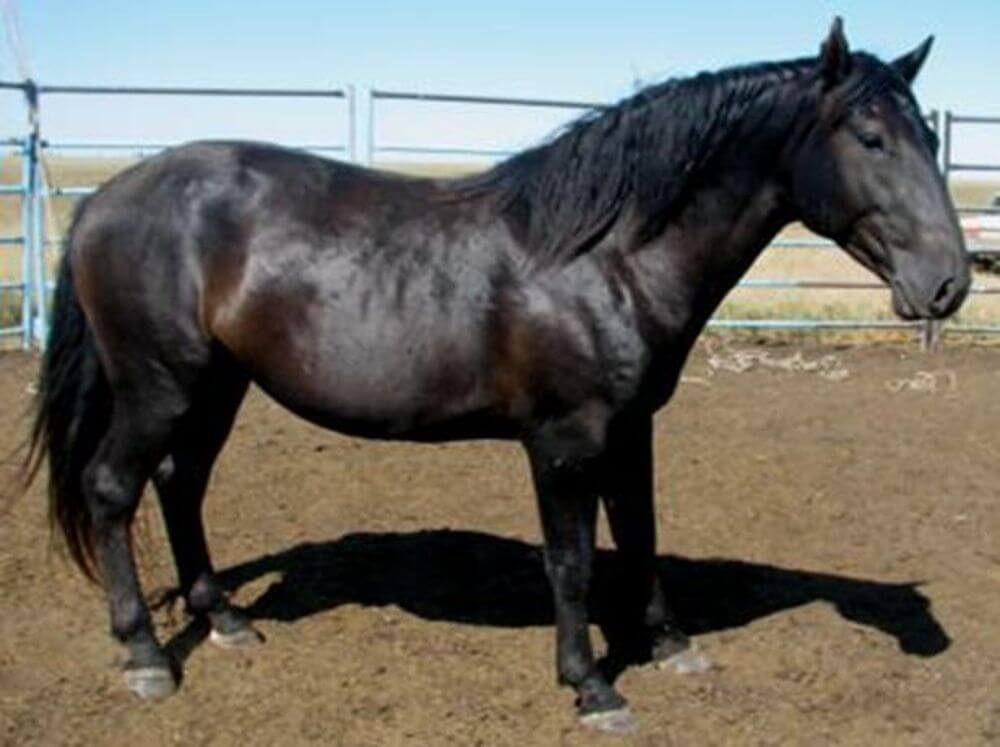
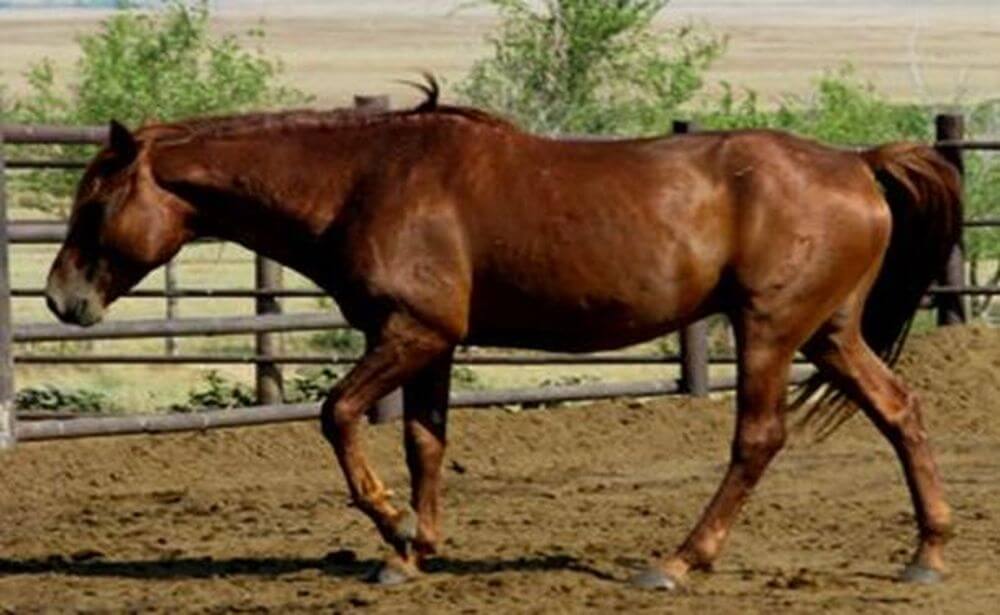
The Kushum horse breed was developed on the basis of complex reproductive crossing of local Kazakh mares with trotting, Thoroughbred riding, and Don breed stallions.
The coat colors include chestnut, bay, brown, seal brown, and black, often with markings on the head and limbs. The live weight of stallions is 590 kg, and that of mares is 520 kg. The carcass weight of 2.5-year-old young stallions is 280 kg, with a slaughter yield of 53%. The milk productivity of mares is 2,100–2,200 liters per year.
Within the Kushum breed, there are two ecological, or zonal, types formed under the influence of different natural and climatic conditions and horse breeding systems in Aktobe and West Kazakhstan regions. Kushum horses are favorably distinguished from a number of other breeds by such economically valuable traits as early maturity, fertility, high meat and milk productivity, good adaptability to year-round pasture and winter grazing management, and economical rearing.
As a result of many years of scientifically based selection and breeding work with Kushum horses, highly productive factory lines of stallions were developed through purebred breeding: Krepysh, Grom, Samotsvet, Laskovy, Khitrets, and Baikal. These lines are distinguished by high live weight: 605 kg in stallions and 520 kg in mares. On the basis of the use of line stallions and mares, the factory types “Rza-Aktobe” and “Zhangalinsky” were developed. The creation of these factory types contributed to the improvement of the breeding and productive qualities of the breed.
Mugalzhar Horse Breed of Meat-and-Dairy Productivity
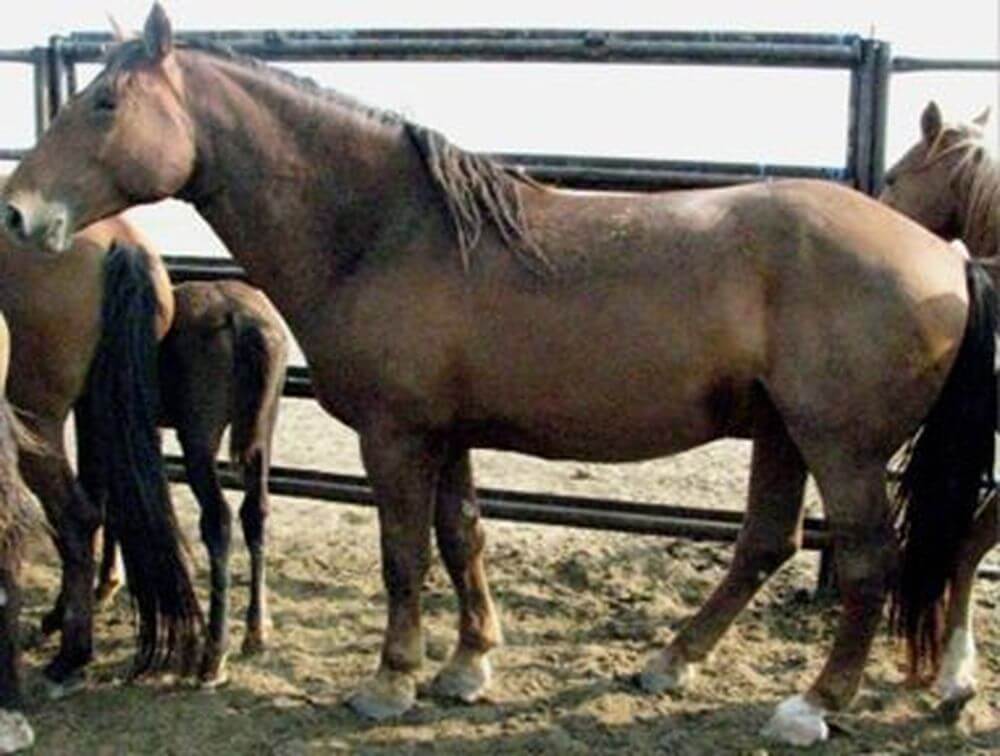
Authors of the breed: Barmintsev Yu.N., Nechayev I.N., Kikebayev N.A., Zhumagul A.E., Bakhtybayev K.D., Begimbetova G.S., and others. Patent No. 178 dated August 4, 2011.
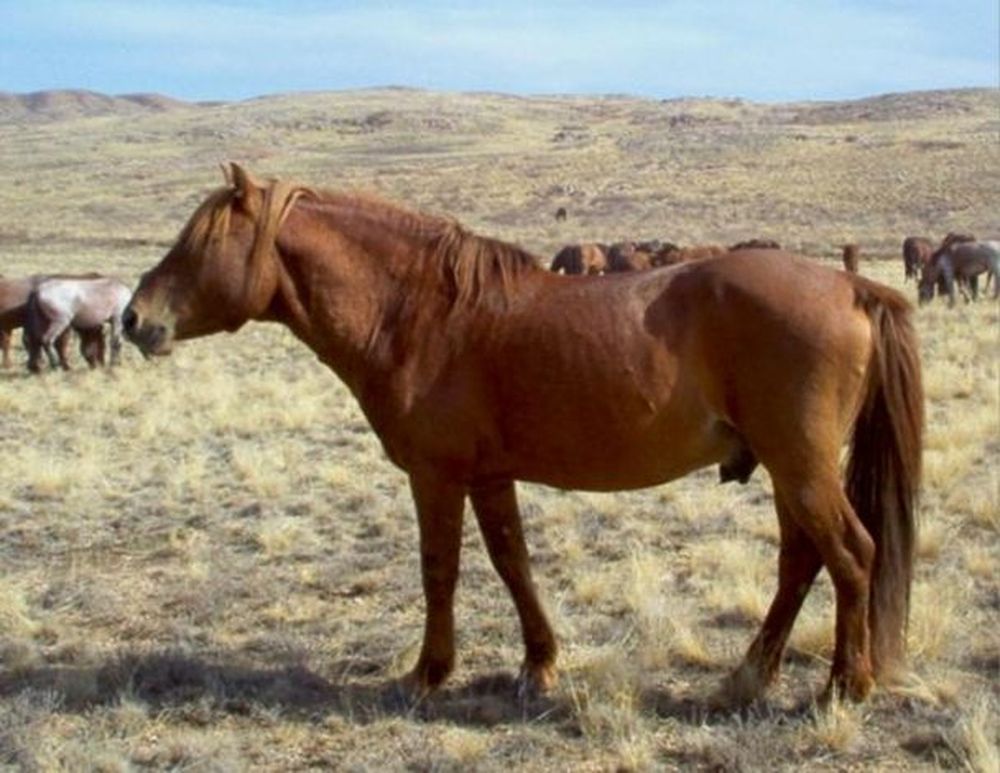
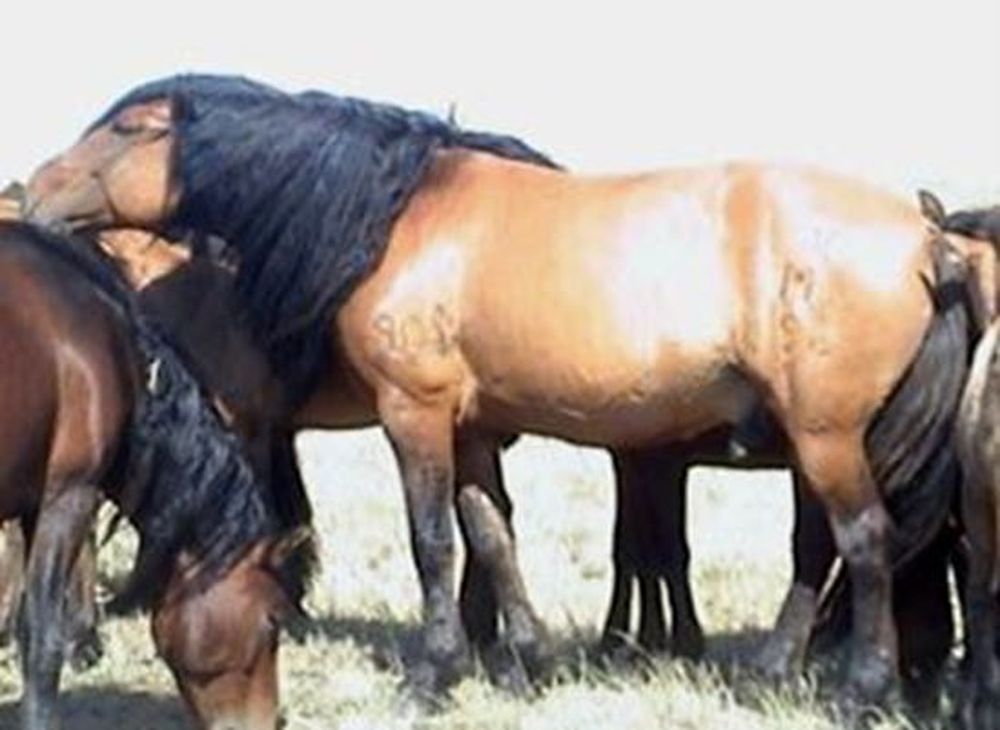
The Mugalzhar horse breed was developed in 1998 on the basis of purebred breeding and improvement of Kazakh horses of the Jabe type in the selection herds of breeding farms. Mugalzhar horses possess such exterior merits as massiveness, harmonious conformation, a strong constitution, sufficient bone development, correct positioning and structure of the limbs, solid coat colors — buckskin, dun, chestnut, bay, and mouse-grey — and a well-developed hair coat.
Mares of the Mugalzhar breed are characterized by high milk productivity under pasture management conditions. Adult horses of the Mugalzhar breed produce a carcass weight of 255 kg, with a slaughter yield of 56.7%, which indicates their good meat productivity. The meat of Mugalzhar horses is distinguished by high nutritional value in all parameters: chemical and biological indicators, the ratio of lean meat, fat, and bones, complete protein content, as well as caloric value. The average live weight of Mugalzhar stallions is 530 kg, and that of mares is 480 kg.
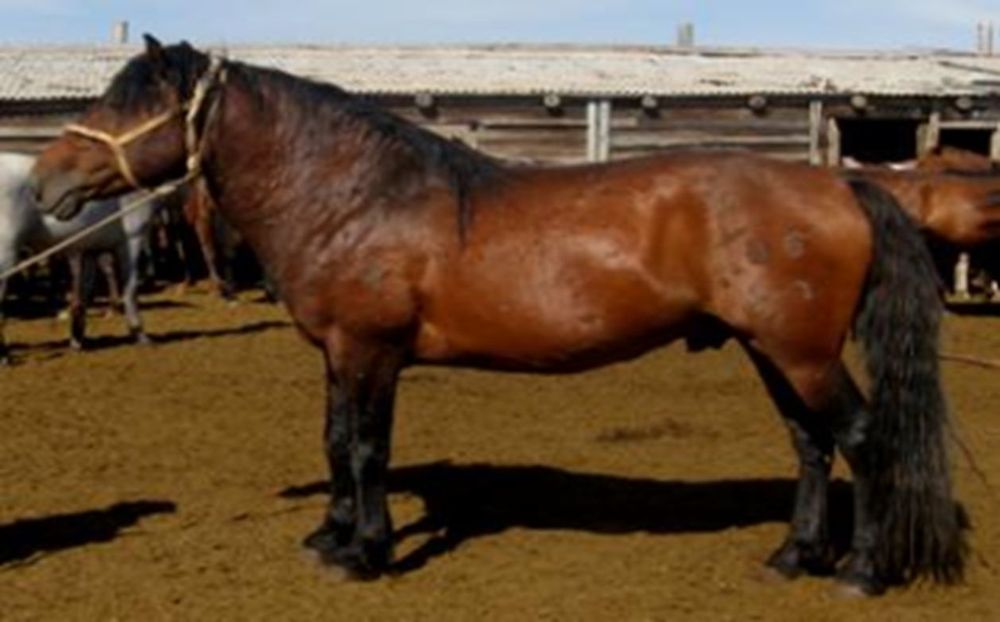
Kozhamberdy Intrabreed Type
Authors of the breed: I.N. Nechayev, A.E. Zhumagulov, A.A. Torekhanov, D.A. Sydykov, N.A. Kikebayev, G.V. Sizonov, and others. Patent No. 60 dated May 20, 2009.
Horses of this type are characterized by high meat productivity and are well adapted to the harsh conditions of year-round pasture and winter grazing management in the central zone of Kazakhstan.
During improvement work aimed at creating the Kozhamberdy intrabreed type of meat-and-dairy productivity, the task was set to increase the productive qualities of Jabe horses through targeted reproduction and intensive rearing of stallions and mares that were the best in terms of type, exterior, productivity, and adaptability to year-round pasture and winter grazing management. Pair selection was based on the alternation of inbreeding and outbreeding, taking into account their genotype and phenotypic indicators.
A genetically fixed trait of horses of the Kozhamberdy intrabreed type is good meat productivity: a carcass weight of 255 kg and a very high slaughter yield of 58.1%. This is of great value for further improvement of both the Kozhamberdy intrabreed type and the Mugalzhar breed as a whole.
Within the Kozhamberdy intrabreed type of the Mugalzhar breed, there is the Saryarka factory type and the Meiman line.
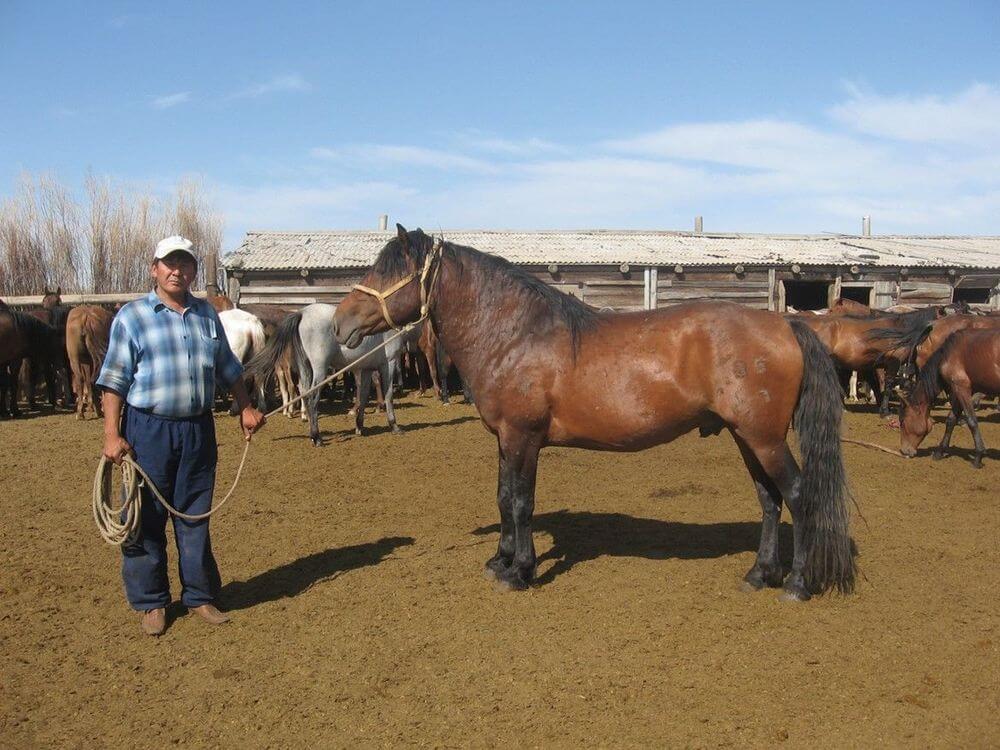
Kulandy Intrabreed Type
Authors of the breed: I.N. Nechayev, A.E. Zhumagulov, A.A. Torekhanov, G. Begimbetova, and others. Patent No. 153 dated August 18, 2010.
Horses of this type are characterized by high meat productivity and excellent viability under the harsh climatic conditions of the Aral Sea region.
A significant distinguishing feature of mares of the Kulandy intrabreed type is their excellent growth, elongated body, large chest girth, optimal bone development, high live weight, and good meat conformation.
The average live weight of breeding stallions is 495 kg, and that of mares is 465 kg. Young stock at 2.5 years of age has a live weight of 380 kg in young males and 370 kg in young females.
The genealogical structure of the Kulandy intrabreed type is represented by the previously approved Patok and Zaliv lines, as well as the newly developed Aral and Kulan lines.
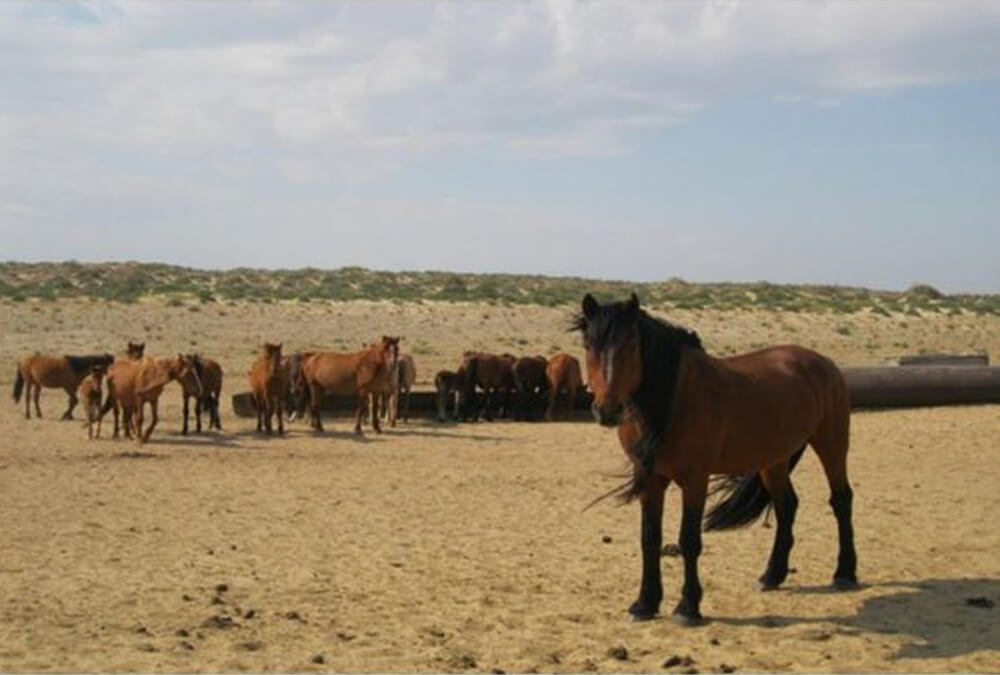
Adai Riding Intrabreed Type of the Kazakh Horse
Authors of the breed: Torekhanov A.A., Sydykov D.A., Baktybayev G.T., Kalzhanuly T., Ratov S.K., Duisembayev K.I., Bekenbayev M.K., Mukyrbayev B.M., Sharif D.Sh., Kozhanov Zh.E. Patent No. 1111 dated December 29, 2023.
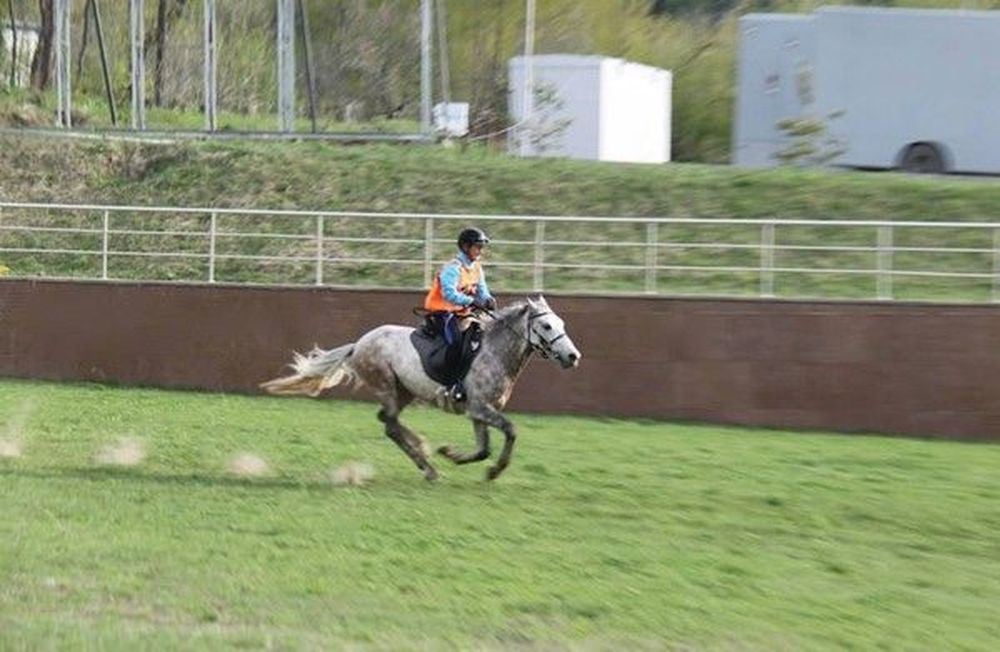
Average indicators: height at withers — 147.2 cm; oblique body length — 149.1 cm; chest girth — 176.1 cm; cannon bone girth — 19.0 cm; live weight — 436 kg.
The official history of long-distance horse races dates back to the 19th century, with races over a distance of more than 100 versts, or 106.7 km. The record set in 1895 was 5 hours 33 minutes 23 seconds. In 1908, the Frenchman Bosil improved this record to 4 hours 15 minutes, and it remained in place until 1948. The all-Union record of 1948 is considered to be the performance of the improved Kazakh stallion Tshan — 4 hours 6 minutes. Subsequently, records set in Kazakhstan over distances of 100 km and more were not recorded and were not taken into account by official judges.
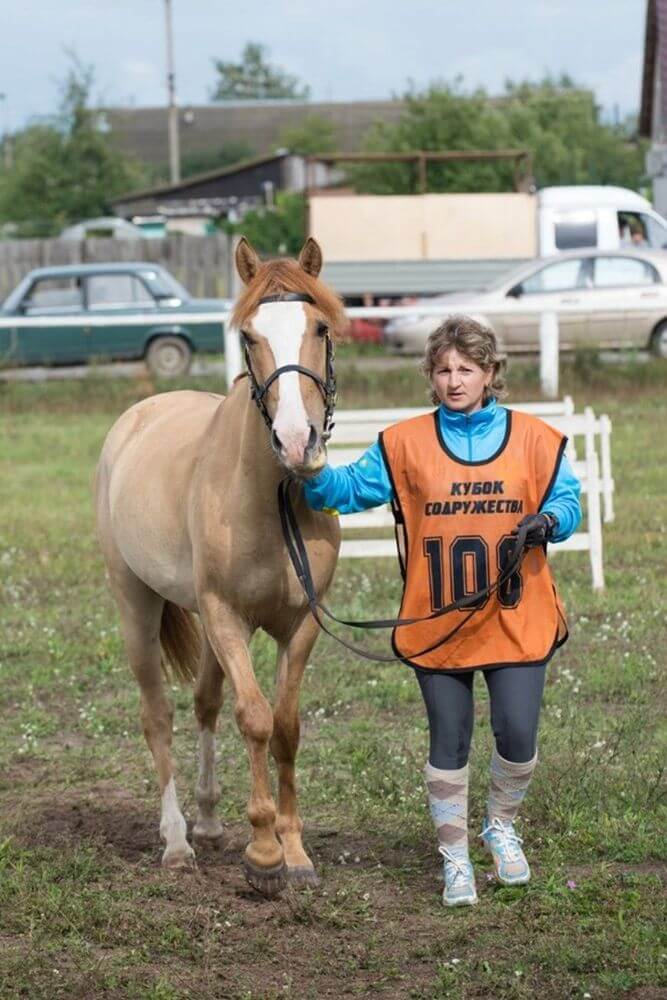
Factory Line Rattory-60 of the Adai Type of the Kazakh Horse Breed
Authors of the breed: Sydykov D.A., Torekhanov A.A., Nurmakhanbetov D.M., Baktybayev G.T., Kozhanov Zh.E., Turmukhametov Zh.S., Kalzhanuly T., Ratov S.K., Koishiyev A.S. Patent No. 1110 dated December 29, 2023.
The history of developing the Rattory-60 riding line of the Adai breed group dates back several decades. Horses of this line became famous in local Kazakh national horse races — baige — as early as the 1990s, while true recognition came during the international endurance riding competitions held in 2011–2014 over distances of 80, 120, and 160 km.
The stallion Rattory (1960) became famous for his numerous victories in traditional Kazakh horse races — baige. His son Tory Shunak (1972) and grandson Kyzyl Zhebe (1983) were also well-known baige horses. Rattory-60’s great-grandson, the bay stallion Almaz Tory (1993), was destined to become famous not only for his victories and valuable prizes in Kazakh baige, but also thanks to his sons, grandsons, and great-grandsons, who became winners over distances of 80, 120, and 160 km at various international competitions.
Riding horses of the Rattory-60 line are distinguished by higher chest girth indicators. Stallions of the Rattory-60 line at the age of 5.5 years, with an average live weight of 430 kg, have a chest girth of 175 cm. This indicator exceeds the corresponding measurements of other native strains of Kazakh horses by 5–7 cm.
Factory Line Bugabai Kiik Konyr-98 of the Adai Strain of the Kazakh Horse
Authors of the breed: Sydykov D.A., Baktybayev G.T., Mukyrbayev B.M., Kozhanov Zh.E., Mukyrbayev B.B., Kalzhanuly T., Talzhanov E.A., Akhmetsadykova Sh.N. Patent No. 1112 dated December 29, 2023.
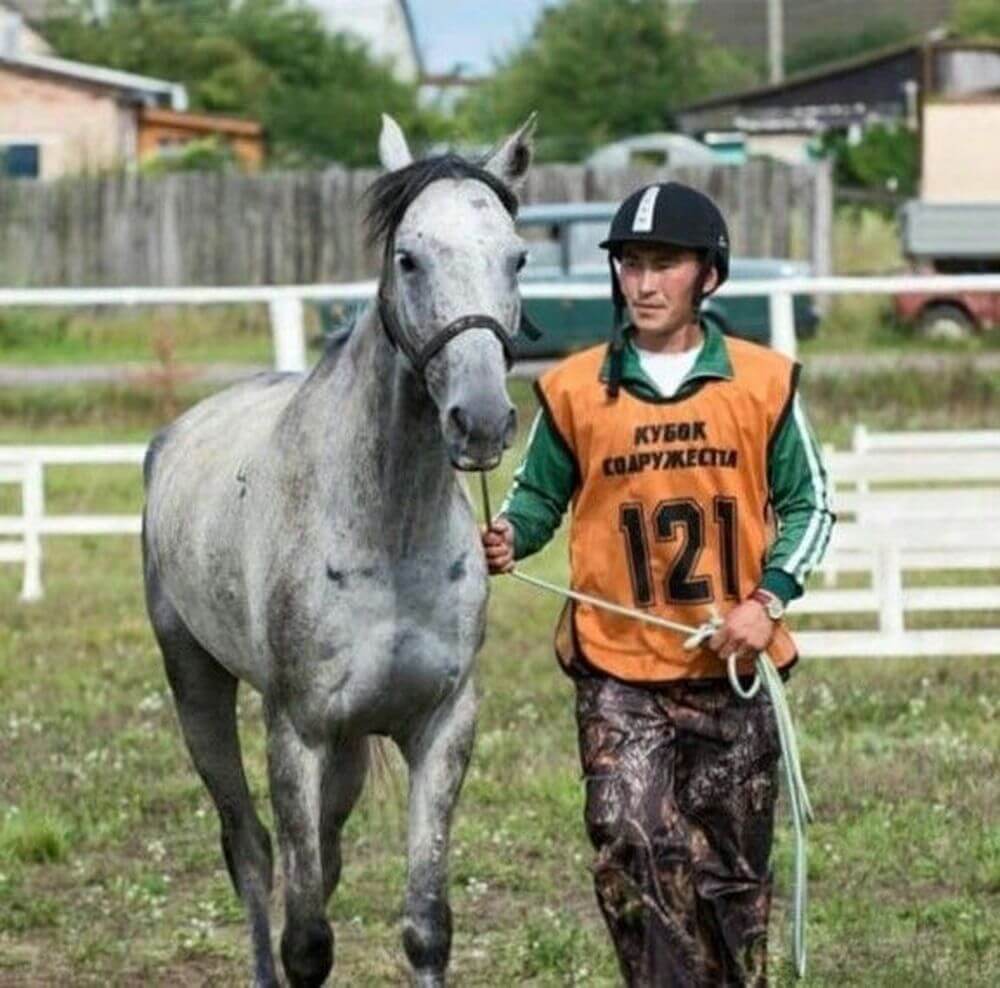
Average indicators: height at withers — 146.8 cm; oblique body length — 148.9 cm; chest girth — 175.1 cm; cannon bone girth — 18.7 cm; live weight — 438.1 kg.
The founder of the riding line Bugabai Kiik Konyr-98 of the Adai breed group has a rich ancestral history on the Mangyshlak Peninsula. Tory Alayak, born in 1978, was the winner of many races. From his son, the black stallion Kaskyrbay, born in 1982, descended Shabdar, born in 1989, and from him, in 1998, Bugabai Kiik Konyr-98 was born, the founder of a new riding line. Horses of this line became famous during the international endurance riding competitions held in 2011–2014 over distances of 80, 120, and 160 km.
Factory Line "Manap Sur-93" of the Adai Strain of the Kazakh Horse
Authors of the breed: Sydykov D.A., Duisembayev K.I., Baktybayev G.T., Kozhanov Zh.E., Kalzhanuly T., Bekembayev O.K., Bekenbayev M.K., Torekhanov M.A., Dosybayev K., Akhmetov U.A. Patent No. 1113 dated December 29, 2023.
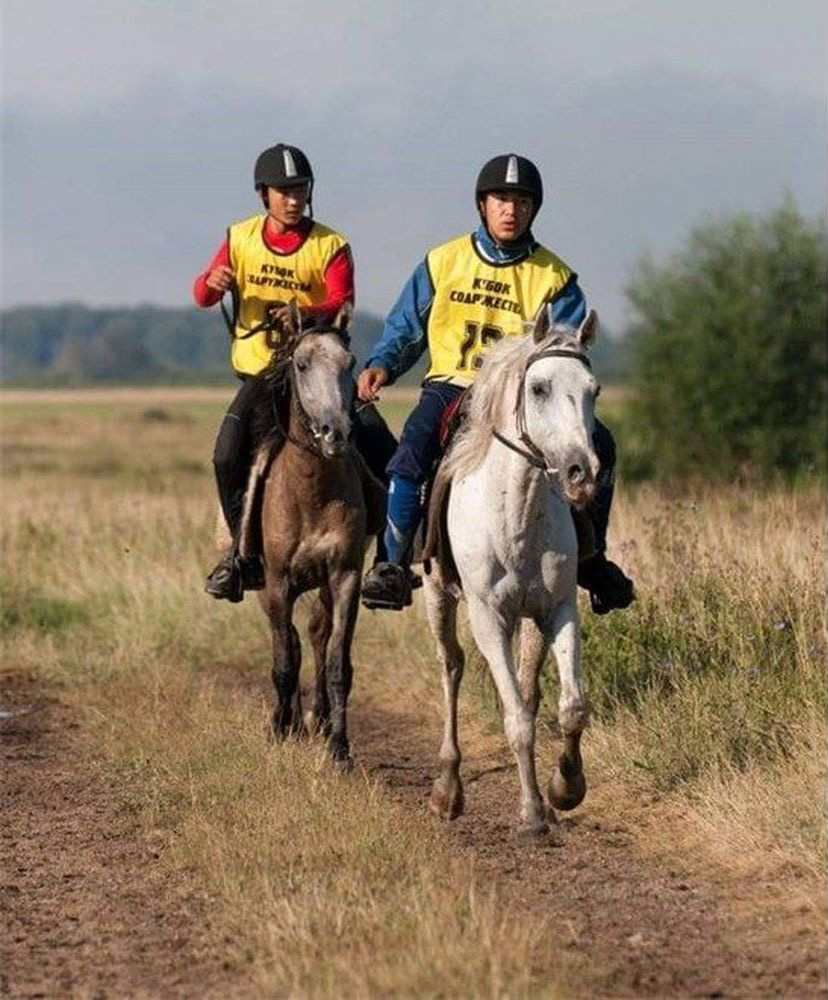
Average indicators: height at withers — 147.1 cm; oblique body length — 149.2 cm; chest girth — 176.2 cm; cannon bone girth — 19.0 cm; live weight — 435.1 kg.
The founder of the riding line “Manap Sur-93” of the Adai breed group descends from well-known racehorses of Mangystau Region. His sire, Surdabyl, born in 1990, was a prize-winner in many races over distances of 40–60 km. Horses of this line became famous during the international endurance riding competitions held in 2011–2014 over distances of 80, 120, and 160 km.
Mangystau Intrabreed Productive Type of the Adai Strain of the Kazakh Horse
Authors of the breed: Imangaliyev A.I., Sizonov G.V., Nauryzmaganbetov K., Yergaliyev K., Sydykov D.A., Baktybayev G.T., Kalzhanuly T., Alikhanov O., Omarov S.M., Nurushev M.Zh., Torekhanov A.A. Patent No. 1114 dated December 29, 2023.
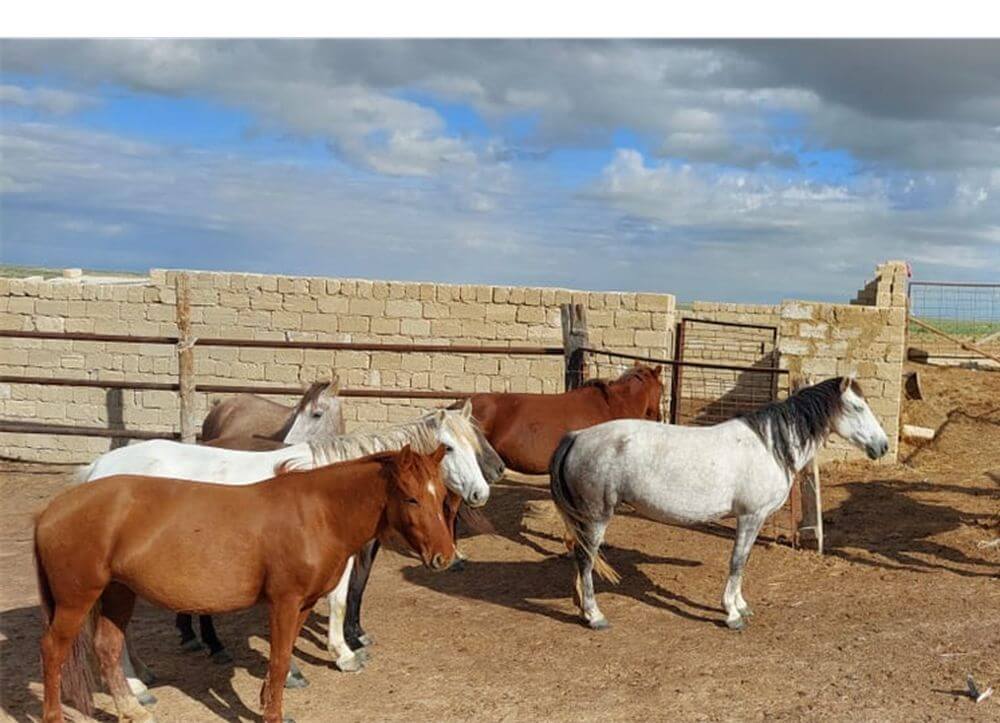
Average indicators: height at withers — 143.5 cm; oblique body length — 144.0 cm; chest girth — 169.9 cm; cannon bone girth — 18.0 cm; live weight — 430 kg.
The Kazakh horse breed was formed on the territory of Kazakhstan as a result of centuries-long natural selection under the influence of a harsh climate in conditions of extensive herd horse breeding, as well as artificial selection meeting the requirements for horses in nomadic livestock farming.
The population of the Kazakh horse breed is highly heterogeneous. This is explained primarily by the differences in natural conditions across the entire territory of Kazakhstan and by the unequal degree of influence of other breeds.
Professor Yu.N. Barmintsev identified seven main strains within the Kazakh horse breed. The identification of these strains was based on conformation features and the nature of productivity. These qualities were explained by the uniformity of origin and the similarity of conditions for breeding and using the horses.
"Adai" Horse Breed
Authors of the breed: Sizonov G.V., Imangaliyev A.I., Nauryzmaganbetov K., Zhabasov K., Nechayev I.N., Abishuly S., Yergaliyev K., Orisbayev T., Ozganbayev B., Sydykov D.A., Baktybayev G.T., Kalzhanuly T., Ratov S.K., Bekenbayev M.K., Mukyrbayev B.M., Sharif D.Sh., Kulbekov O.Z., Dosybayev K., Zaitsev A.M., Bagdabayev A.E., Bekturov T. Patent No. 1115 dated December 29, 2023.
Average indicators: height at withers — 147.2 cm; oblique body length — 149.1 cm; chest girth — 176.1 cm; cannon bone girth — 19.0 cm; live weight — 436 kg.
In his monograph The Origin of Domestic Animals, E.A. Bogdanov (1913) wrote: “In a sheep, cow, or horse, the labor of many hundreds of human generations is concentrated, having been invested in small portions over many thousands of years...”.
Professor P.N. Kuleshov studied and taught others to study breeds of farm animals in the historical sequence of their development. This was also taught in biology by K.A. Timiryazev (1949), who pointed out that modern organisms must also be understood on the basis of history.
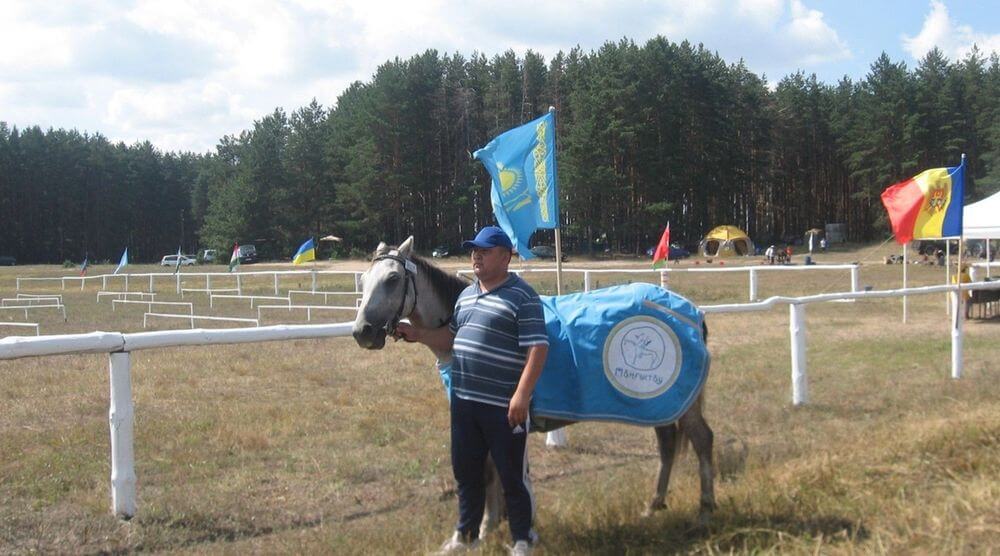
Kaba Type of Horses
Authors of the breed: I.N. Nechayev, A.E. Zhumagul, G.S. Begimbetova, A. Khamitov, and others.
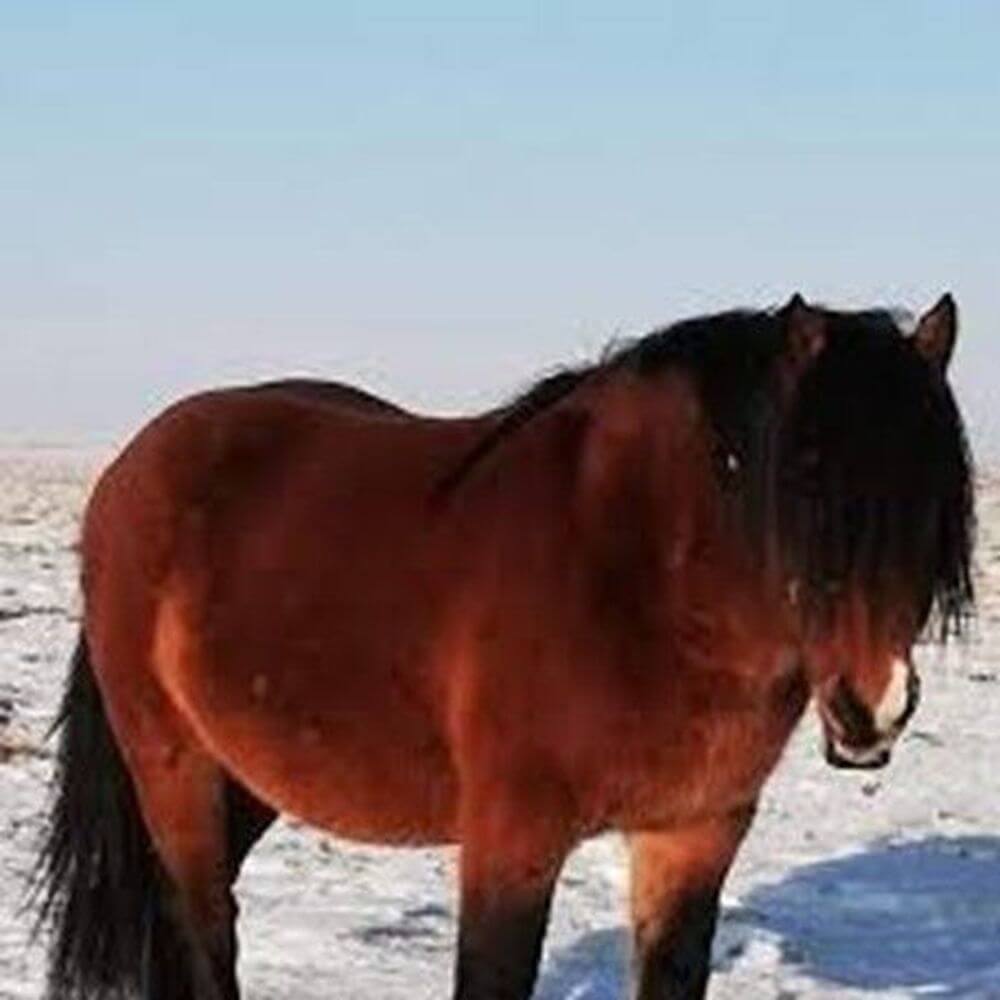
The Kaba meat type of Kazakh horses was developed by crossing Kazakh mares with stallions of the Soviet Heavy Draft breed under conditions of pasture and winter grazing management in the high-mountain areas of East Kazakhstan. The live weight of mature stallions is 650 kg, and that of mares is 570 kg; milk productivity is 2,000 liters per lactation, and the slaughter yield is 56%.
Sheep Breeding
Kazakh Fine-Wool Sheep Breed
The breed was developed in 1946 by the method of absorptive crossing of ewes of the Kazakh fat-tailed sheep breed with Precoce rams.
The live weight of rams is 100–120 kg, wool clip — 8.0–12 kg, clean wool yield — 49–52%, wool length — 9–12 cm, and wool fineness — from 58 to 64 quality grades. In ewes, the corresponding indicators are: live weight — 55–75 kg, wool clip — 4.0–5.5 kg, clean wool yield — 50–55%, and wool length — 8–10 cm.
The live weight of 4-month-old lambs is 30–40 kg, average daily gain — 250–300 g, and carcass yield — 45–50%. Fertility is 120–140%.
- The “Sarybulak” intrabreed type of the Kazakh Fine-Wool sheep breed — patent for a breeding achievement No. 58 dated May 15, 2008;
- The Zharkent intrabreed type of the Kazakh Fine-Wool sheep breed — patent for a breeding achievement No. 692 dated July 20, 2016;
- Factory line of breeding ram No. 01921 of the Zharkent intrabreed type of the Kazakh Fine-Wool sheep breed — patent for a breeding achievement No. 696 dated July 20, 2016;
- Factory line of breeding ram No. 07077 of the Zharkent intrabreed type of the Kazakh Fine-Wool sheep breed — patent for a breeding achievement No. 695 dated July 20, 2016;
- Factory line of breeding ram No. 05114 of the Zharkent intrabreed type of the Kazakh Fine-Wool sheep breed — patent for a breeding achievement No. 694 dated July 20, 2016;
- The Karatal intrabreed type of the Kazakh Fine-Wool sheep breed — patent for a breeding achievement No. 693 dated July 20, 2016;
- The Kurti intrabreed type of the Kazakh Fine-Wool sheep breed — patent for a breeding achievement No. 848 dated July 30, 2018.
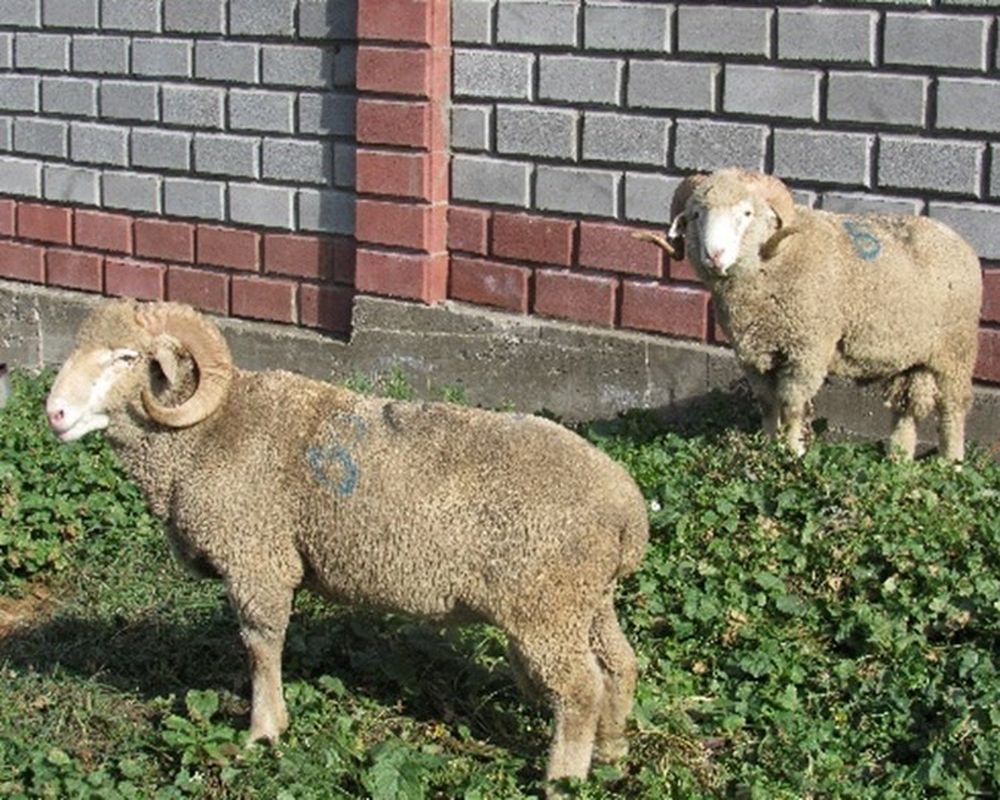
Kazakh Arkhar-Merino
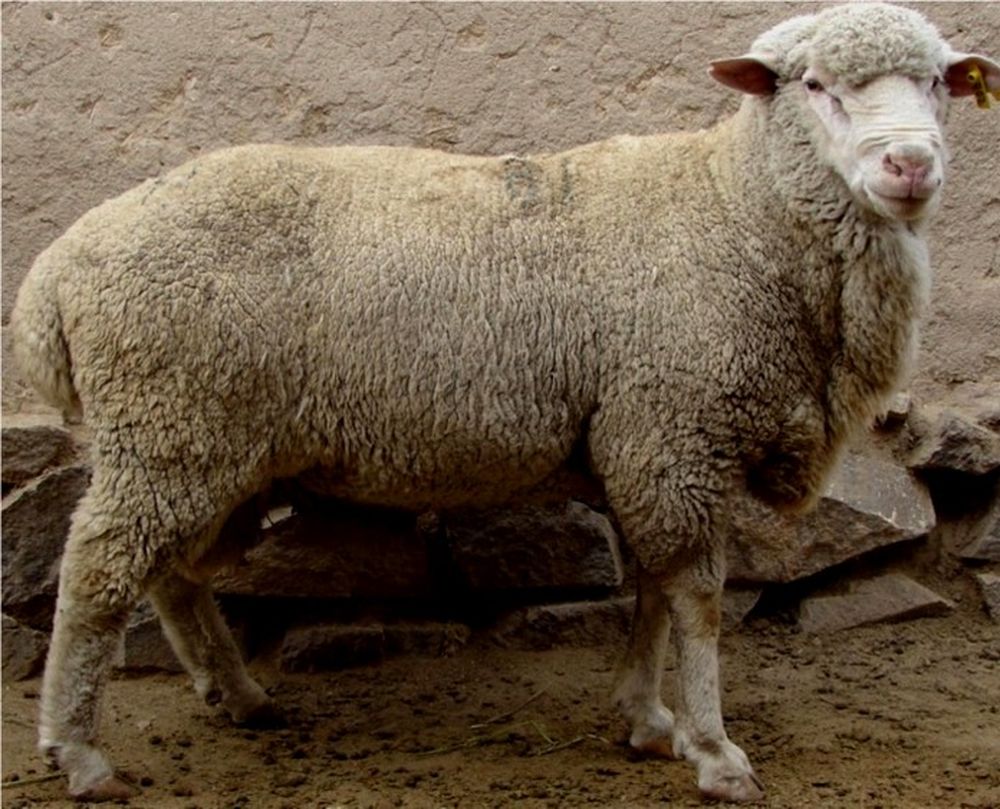
The breed was developed in 1950 in the high-mountain part of Kazakhstan. It is the only breed in the world developed through hybridization of fine-wool sheep breeds — Precoce and the New Caucasian type — with wild arkhar sheep.
The live weight of rams is 90–100 kg, wool clip — 8–11 kg, clean wool yield — 55–57%, and wool length — 9–11 cm. In ewes, the corresponding indicators are: live weight — 58–65 kg, wool clip — 3.8–5.0 kg, clean wool yield — 53–57%, and wool length — 8–10 cm.
The live weight of 4-month-old lambs is 28–35 kg, average daily gain — 200–250 g, and carcass yield — 45–47%. Fertility is 115–130%.
The “Narynkol” intrabreed ecophenotype of the Kazakh Arkhar-Merino sheep breed — patent for a breeding achievement No. 716 dated January 5, 2017.
South Kazakh Merino
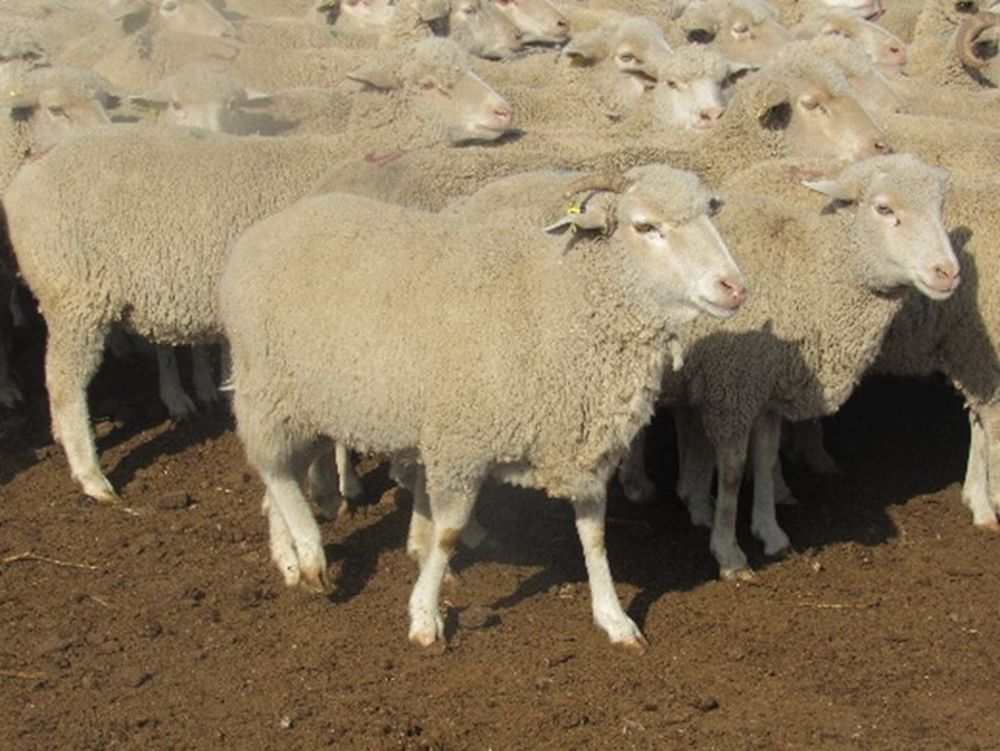
The breed was developed in 1966 by crossing Kazakh coarse-wool fat-tailed ewes with rams of the New Caucasian, Caucasian, Altai, Askanian, Grozny, and Soviet Merino breeds.
The live weight of rams is 85–100 kg, wool clip — 10–12 kg, clean wool yield — 52–54%, and wool length — 9–12 cm. In ewes, the corresponding indicators are: live weight — 50–58 kg, wool clip — 4.5–6.0 kg, clean wool yield — 53–56%, and wool length — 8–11 cm.
Wethers, when slaughtered at the age of 7 months, produce carcasses weighing 12–13 kg. Slaughter yield is 42–48%. The live weight of 4-month-old lambs is 30–35 kg, and the average daily gain is 180–200 g. Fertility is 110–135%.
The desert intrabreed type of South Kazakh Merinos — patent for a breeding achievement No. 563 dated August 18, 2015.
North Kazakh Merino
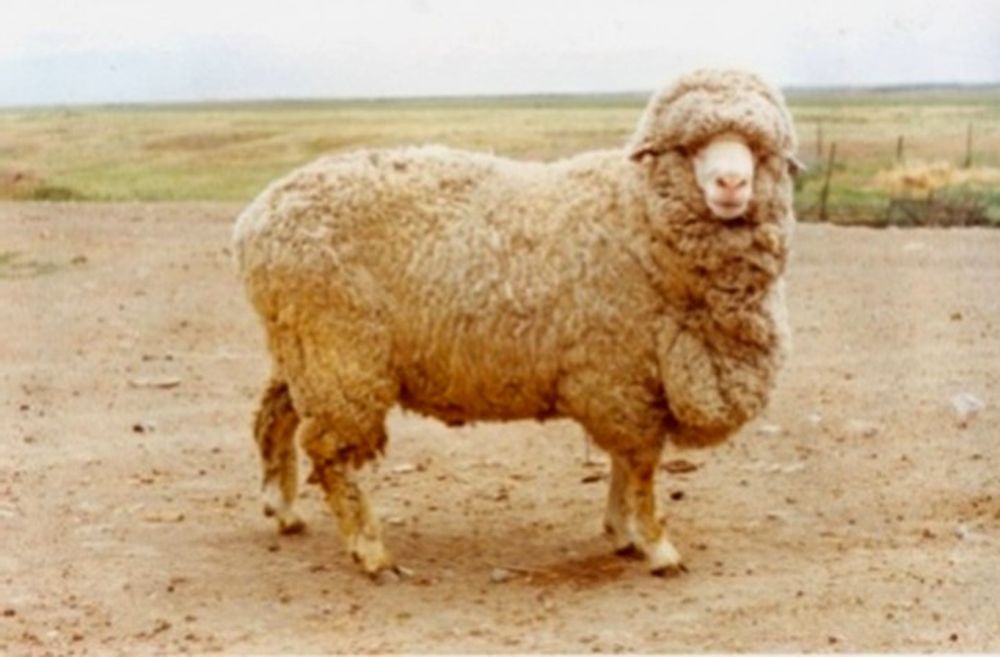
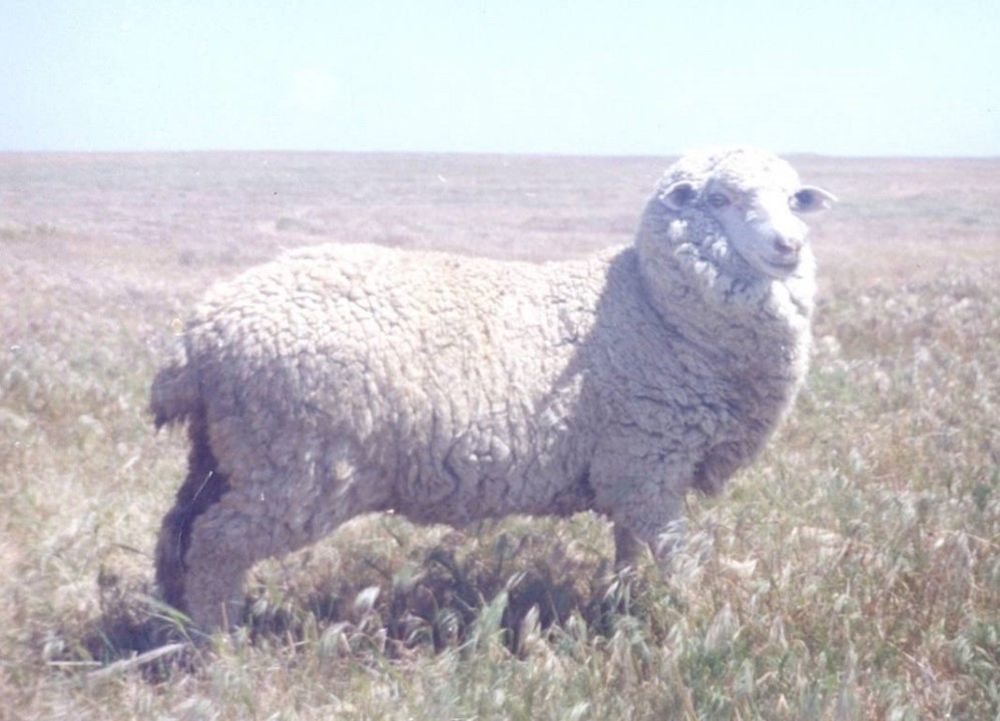
The breed was developed in 1976 by the method of complex reproductive crossing using rams of the New Caucasian and Mazaev Merino breeds, as well as other fine-wool sheep breeds.
The live weight of breeding rams is 100–110 kg, wool clip — 11–15 kg, clean wool yield — 53–55%, and wool length — 10–14 cm. In ewes, the corresponding indicators are: live weight — 60–65 kg, wool clip — 5.0–7.0 kg, and clean wool yield — 55–58%.
The live weight of 4-month-old lambs is 30–35 kg, average daily gain — 180–200 g, and carcass yield — 43–45%. Fertility is 110–135%.
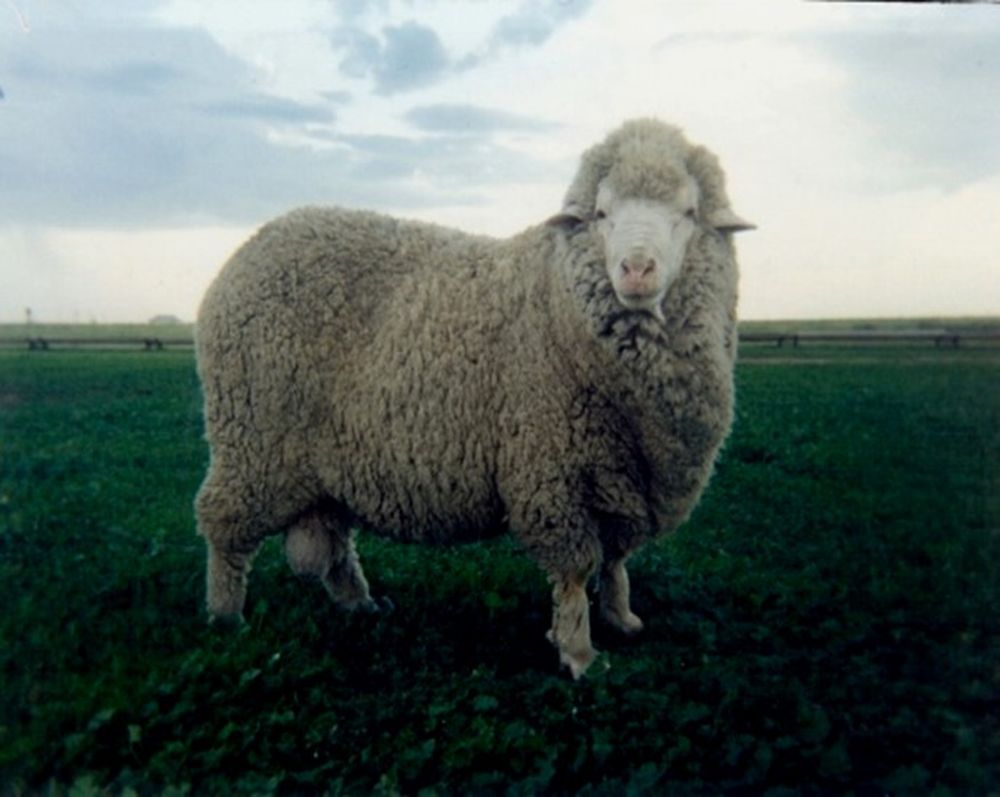
Etti Merino
The breed was developed in 2011 by the method of purebred breeding and crossing Kazakh fine-wool ewes with rams of the Deutsche Merinofleischschaf breed.
The live weight of breeding rams is 100–140 kg, wool clip — 8–12 kg, and wool length — 9–12 cm. In ewes, the corresponding indicators are: live weight — 65–75 kg, wool clip — 4.0–6.0 kg, and wool length — 8–10 cm.
The live weight of 4-month-old lambs is 38–45 kg, average daily gain — 300–400 g, carcass yield — 50–52%, and in adult animals — 53–57%. The yield of lean meat in carcasses is 80–85%. Fertility is 110–150%.
The new sheep breed “Etti Merino” — patent for a breeding achievement No. 177 dated June 27, 2011.
Kazakhstan Merino
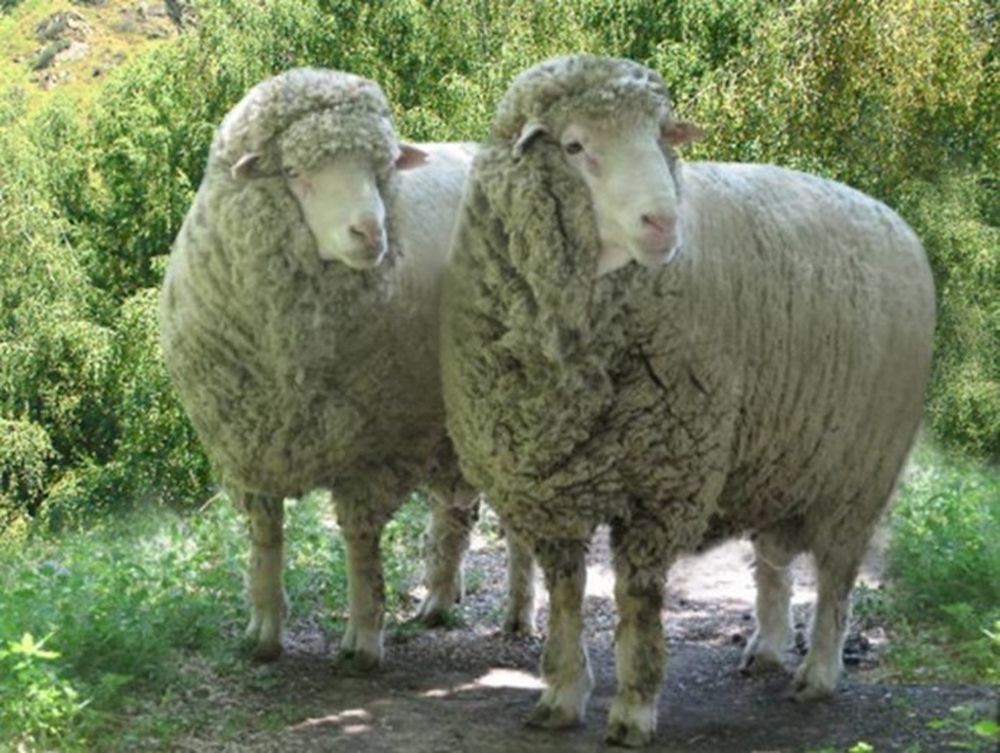
The breed was developed in 2015 on the basis of reproductive crossing of South Kazakh ewes with rams of the Australian Merino breed and the Australian Meat Merino breed.
The live weight of breeding rams is 95–100 kg, wool clip — 10.5–10.8 kg, wool length — 10.5–11.0 cm, and clean wool yield — 60–62%. In ewes, the corresponding indicators are: live weight — 55–58 kg, wool clip — 5.5–5.8 kg, wool length — 9.5–10 cm, and clean wool yield — 62–65%.
Fertility is 120–140%.
Kazakhstan Merino — patent for a breeding achievement No. 580 dated October 20, 2015.
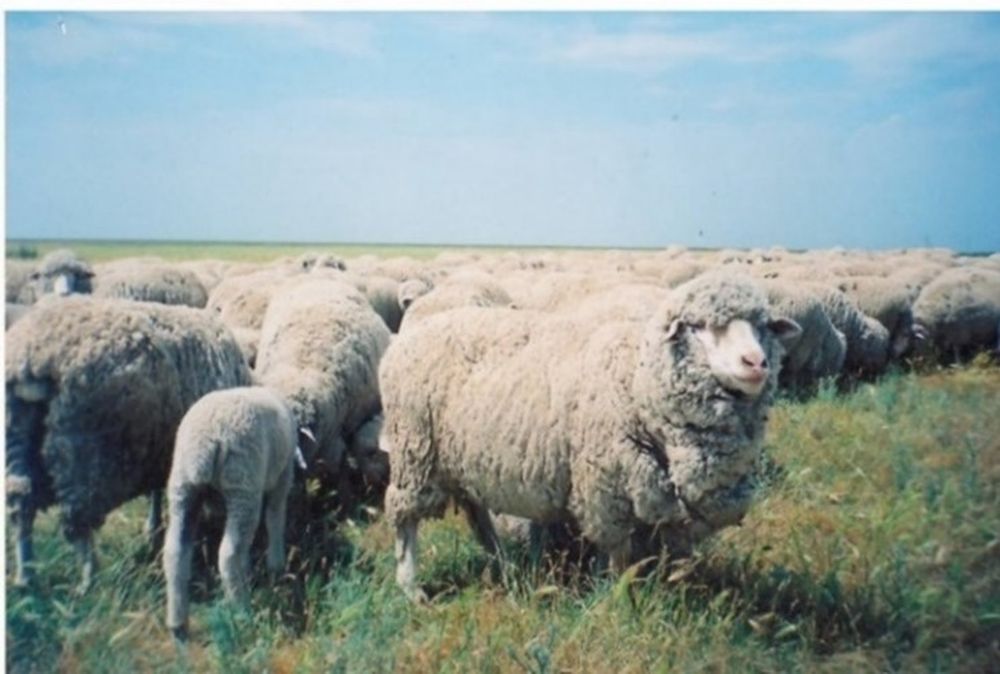
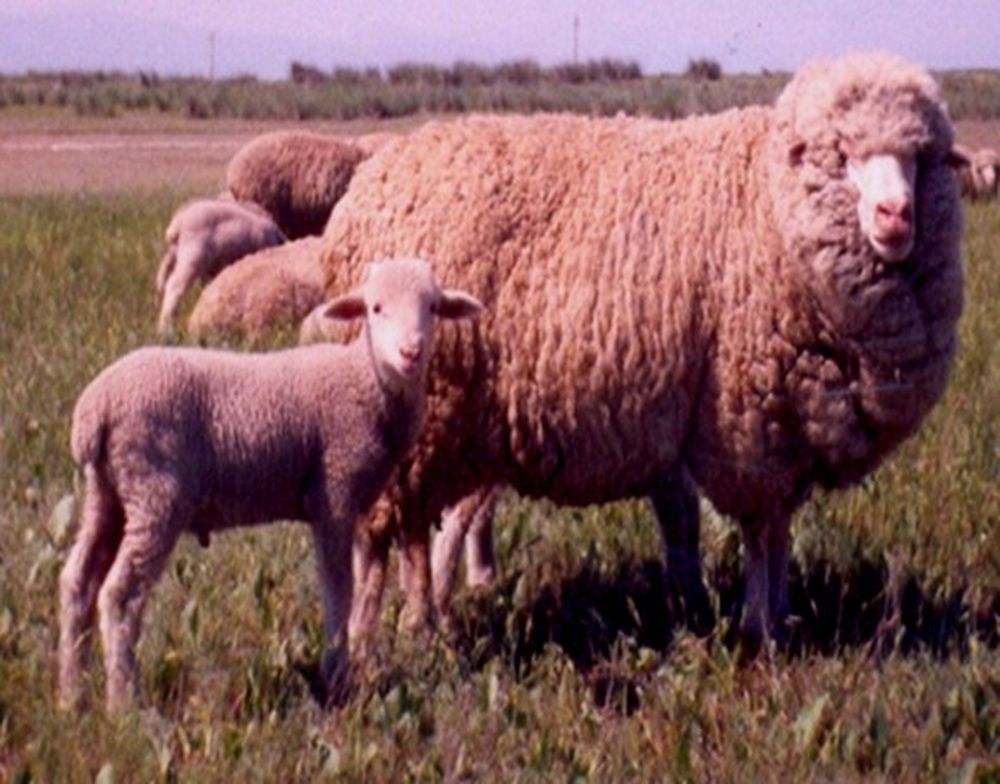
Kazakh Meat-and-Wool Semi-Fine-Wool Sheep Breed
The breed was developed in 1991 by crossing local Kazakh fat-tailed ewes with Precoce rams, followed by introductory crossing with Lincoln and Australian Corriedale rams.
The live weight of breeding rams is 85–100 kg, wool clip — 6.5–7.5 kg, and clean wool yield — 64–65%. In ewes, the corresponding indicators are: live weight — 58–63 kg and wool clip — 3.7–4.5 kg.
Fattening lambs have an average daily gain of 250–300 g, with a carcass yield of 45–50%.
Factory line of ram No. S8590 of the Kazakh Meat-and-Wool sheep breed — patent for a breeding achievement No. 190 dated November 21, 2011.
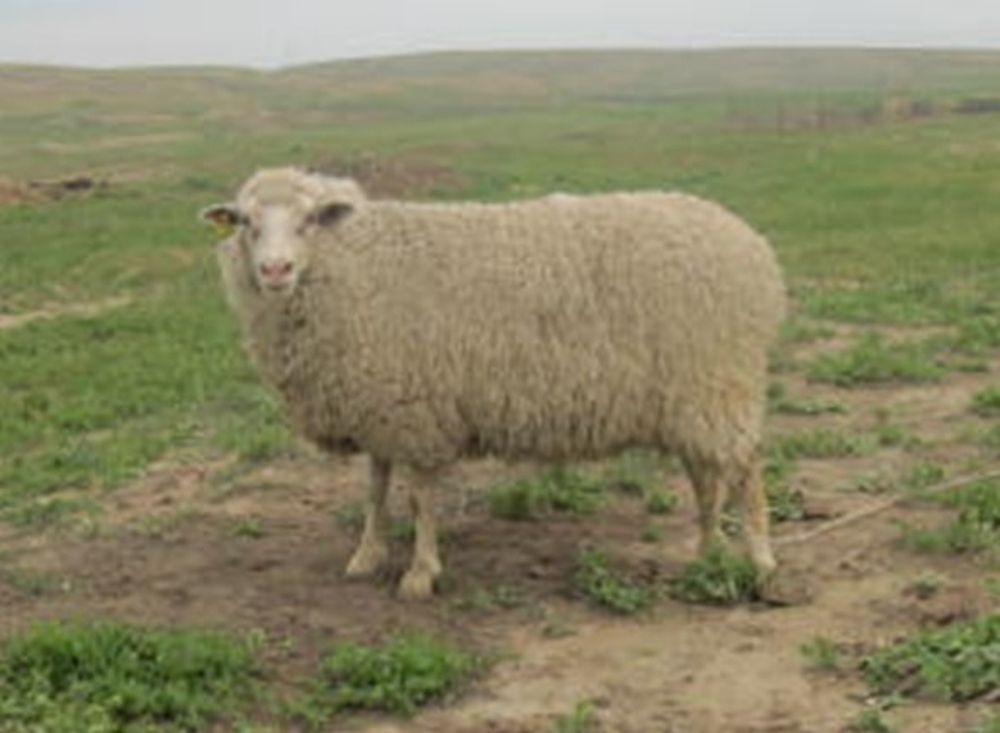
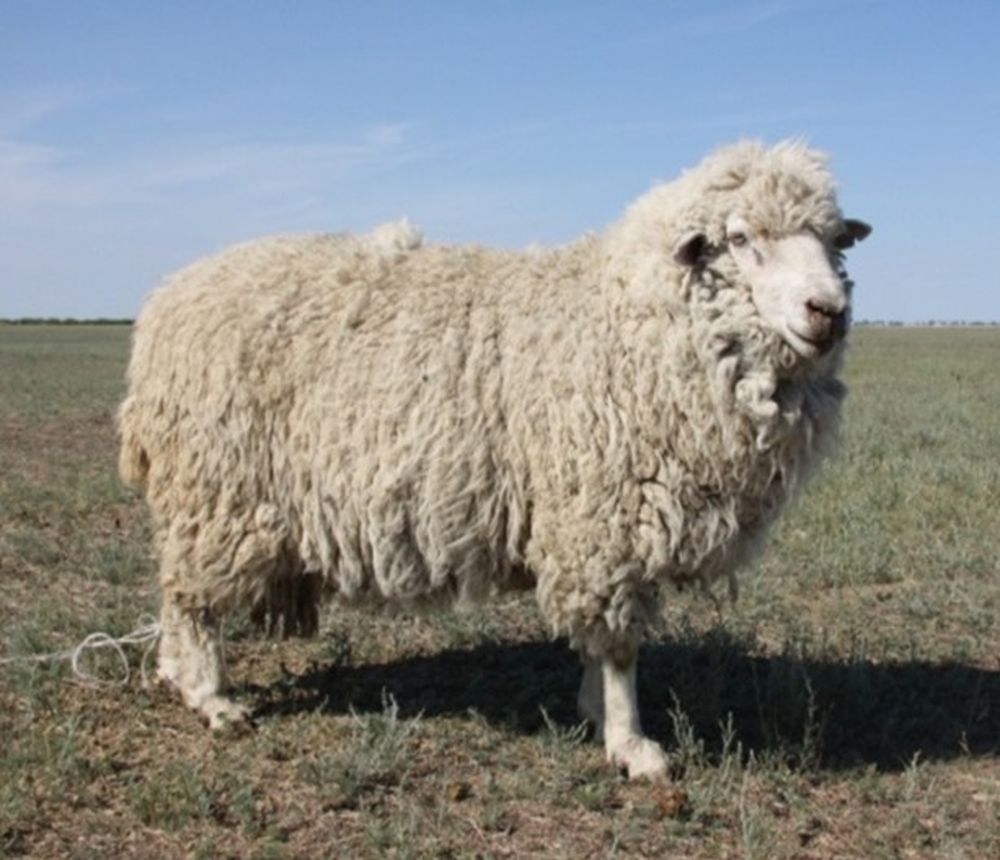
Kazakh Semi-Fine-Wool Sheep Breed with Crossbred Wool
The breed was developed in 1994 through complex interbreed reproductive crossing of ewes of the Kazakh Fine-Wool breed and fine-wool/coarse-wool crossbreds with rams of foreign selection breeds — Lincoln, Romney Marsh, Border Leicester, and Tien Shan.
The live weight of breeding rams is 90–100 kg, wool clip — 6.5–8 kg, and clean wool yield — 58–62%. In ewes, the corresponding indicators are: live weight — 58–60 kg and wool clip — 3.8–4.5 kg.
The main wool assortment is 58–50 quality grades (26.5–30.4 microns). The live weight of 4-month-old lambs is 30–35 kg, average daily gain — 200–250 g, and carcass yield — 43–45%.
Line of ram No. 576 of the Kazakh Semi-Fine-Wool sheep breed with crossbred wool — patent for a breeding achievement No. 194 dated November 21, 2011.
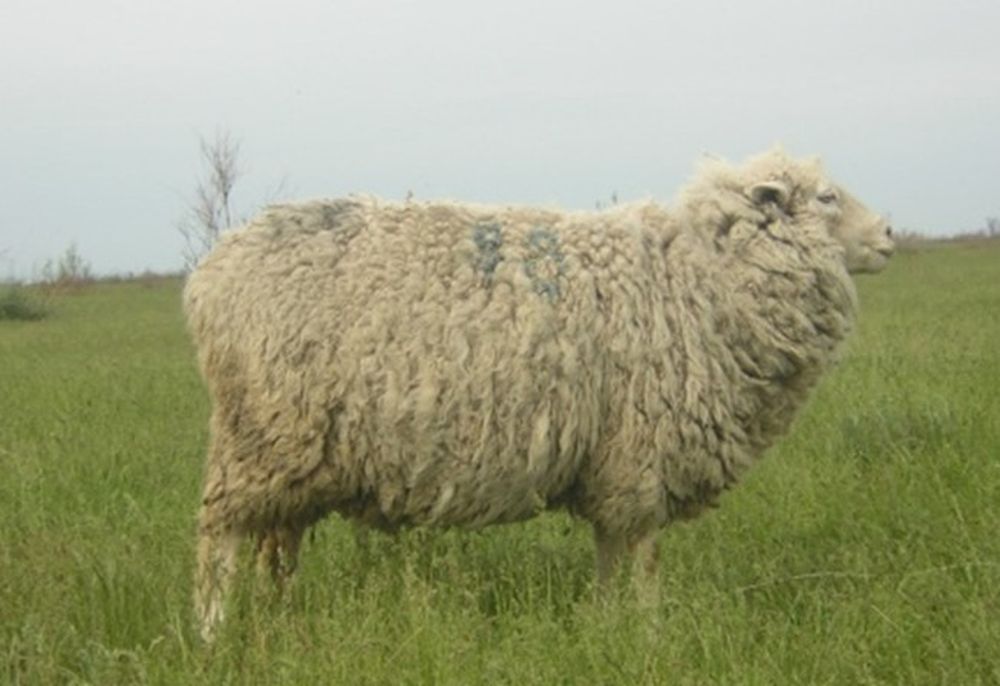
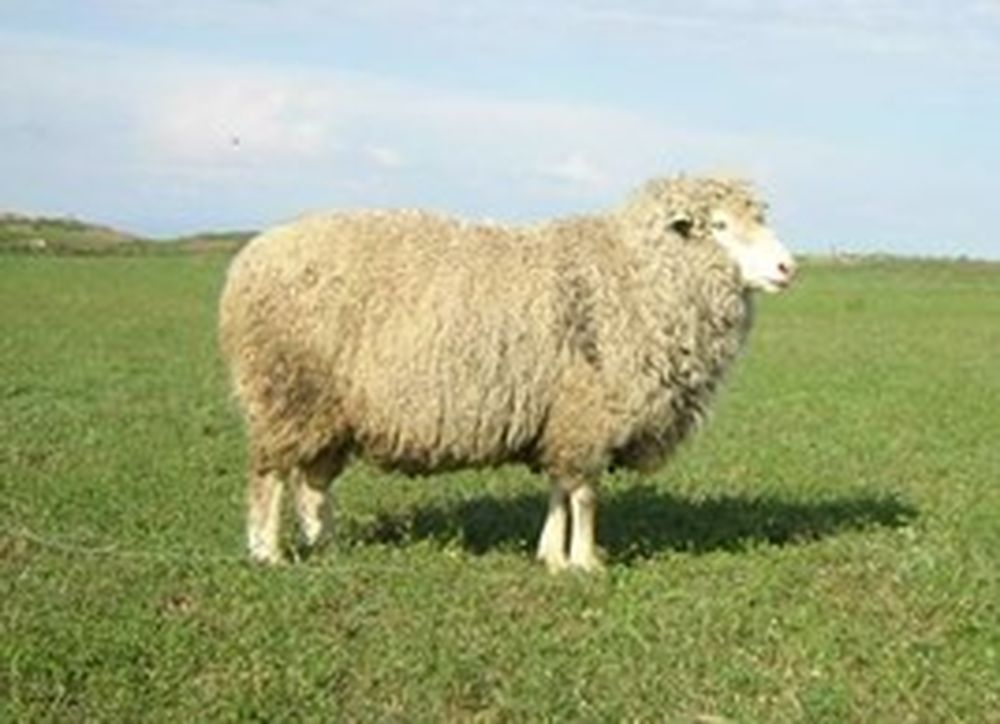
Akzhaiyk Meat-and-Wool Sheep Breed
The breed was developed in 1996 by the method of complex reproductive crossing of fine-wool, semi-fine-wool, and coarse-wool ewes with rams of the Lincoln and Romney Marsh breeds.
The live weight of breeding rams is 94–130 kg, wool clip — 4.1–5.4 kg, wool length — 13–18 cm, and wool fineness — 50–48 quality grades. In ewes, the corresponding indicators are: live weight — 55–60 kg, wool clip — 2.5–2.8 kg, and wool length — 12–15 cm.
Average daily gain is 250–300 g, and the carcass yield of lambs is 45–50%.
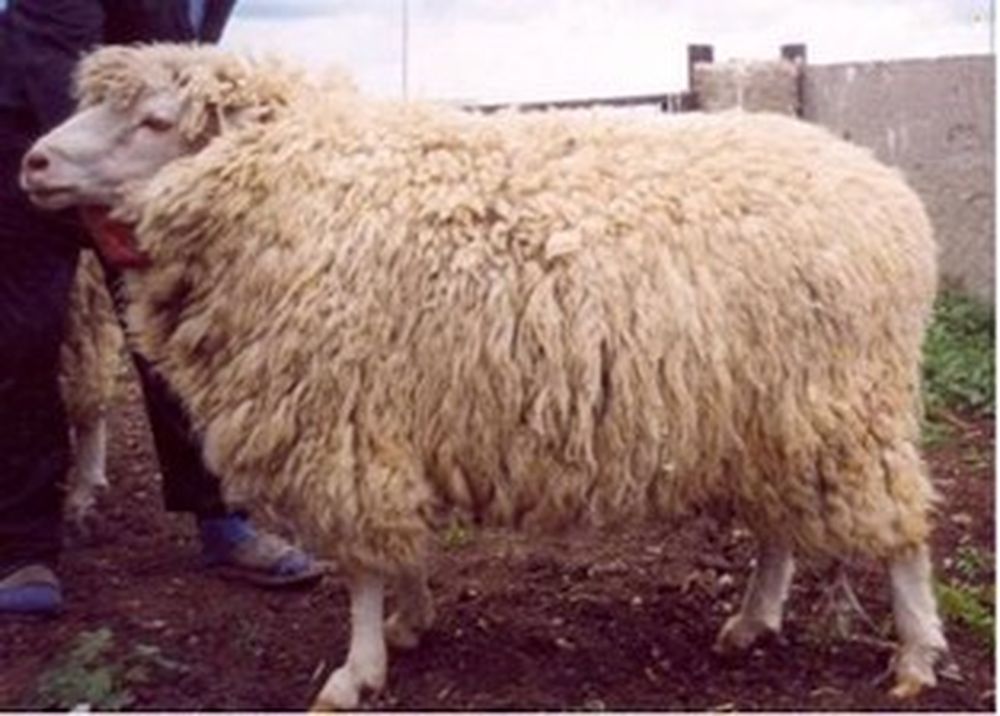
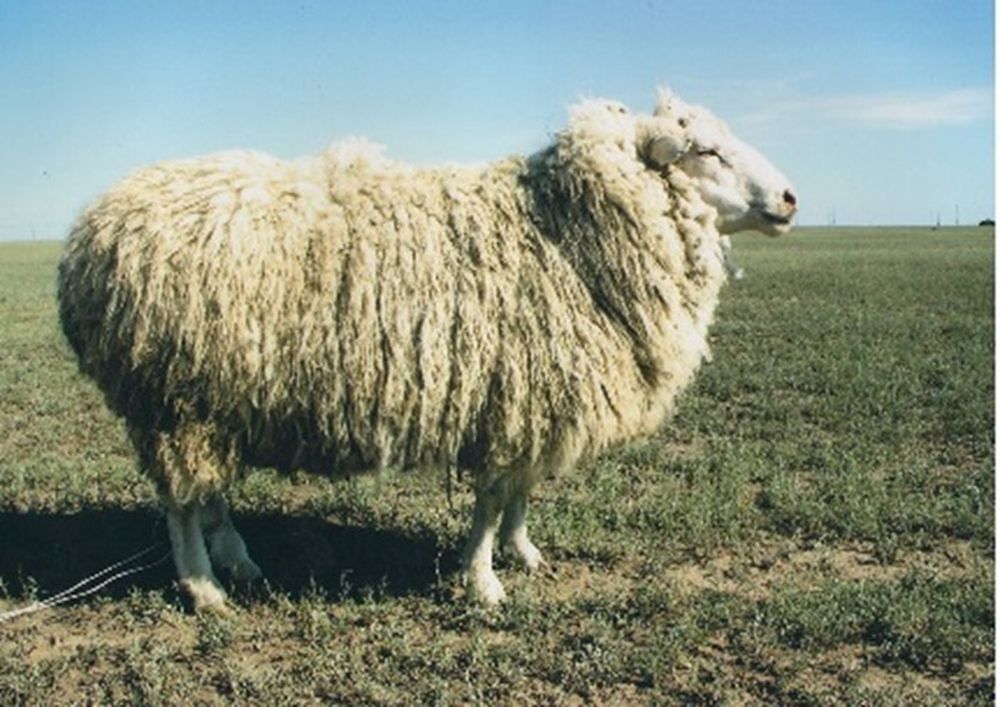
Kazakh Early-Maturing Meat Semi-Fine-Wool Sheep Breed
The breed was approved in 2016. It was developed on the basis of crossing local fat-tailed and fine-wool ewes with Hampshire rams, with the infusion of blood from Oxford Down, Romney Marsh, and Kazakh Meat-and-Wool sheep, followed by breeding crossbreds of the desired type “within themselves”.
The live weight of breeding rams is 90–110 kg, wool clip — 6–7 kg, and clean wool yield — 62–65%. In ewes, the corresponding indicators are: live weight — 62–66 kg and wool clip — 4.5–4.7 kg.
The live weight of 4-month-old lambs is 32–33 kg, and the average daily gain is 200–250 g. Fertility is 130–150%.
The breed is recommended for industrial crossing with other breeds to produce meat lambs.
- Kazakh Early-Maturing Meat Semi-Fine-Wool Sheep Breed — patent for a breeding achievement No. 684 dated June 15, 2016;
- Factory type of Kazakh Early-Maturing Meat Semi-Fine-Wool Sheep — patent for a breeding achievement No. 691 dated July 20, 2016.
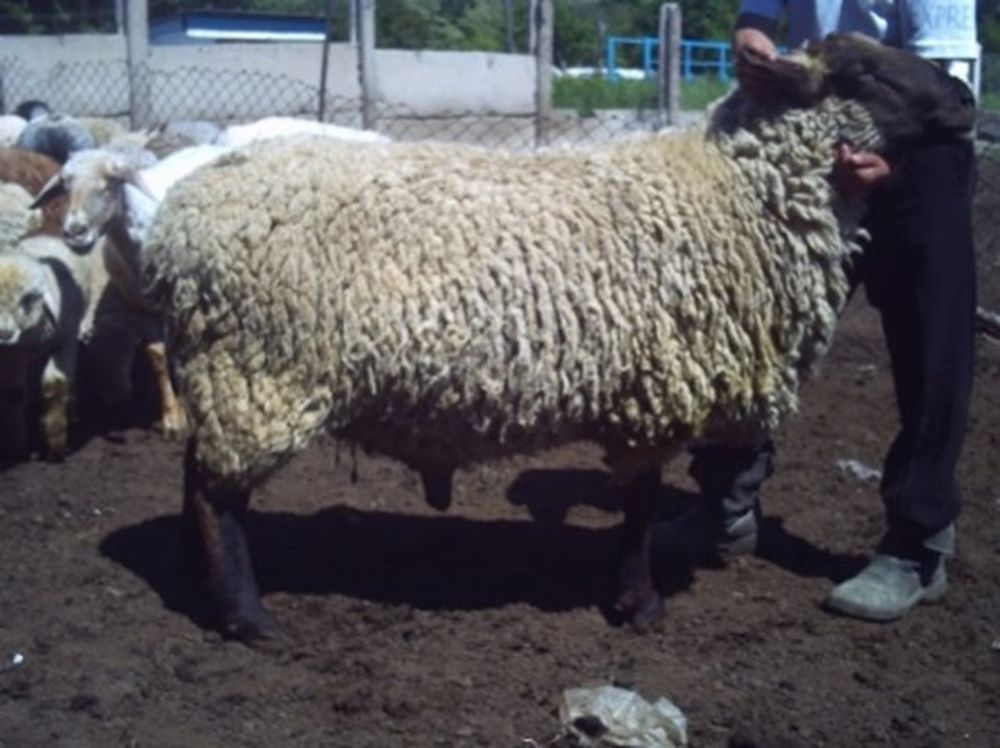
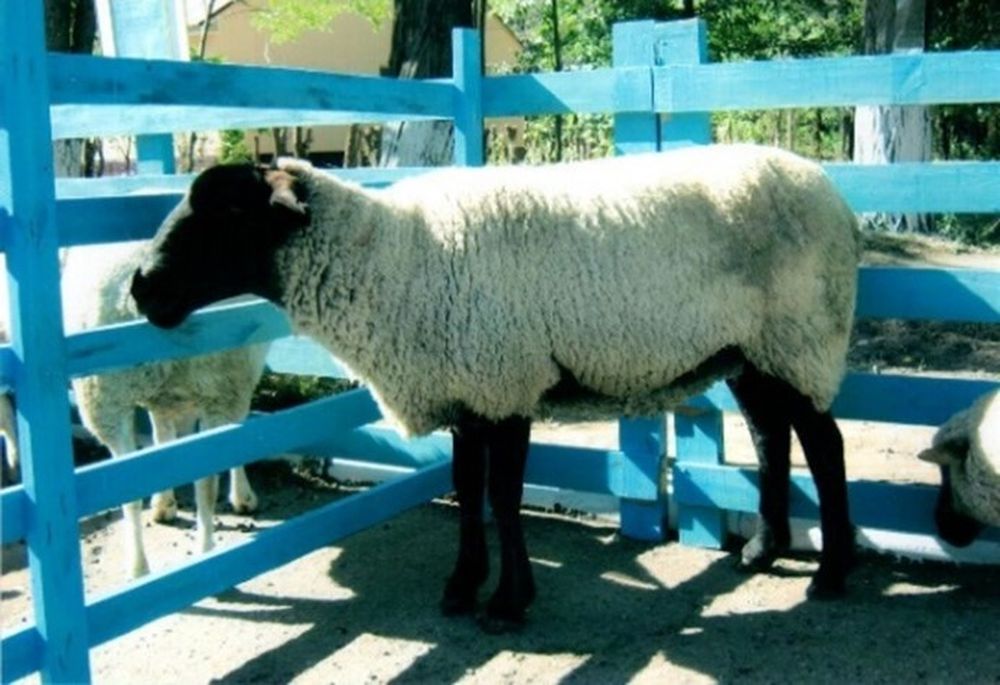
Kazakh Fat-Tailed Coarse-Wool Sheep Breed
The breed was developed through traditional folk selection. These sheep are distinguished by relatively high early maturity, especially during the first 16–18 months of development.
The live weight of breeding rams is 90–102 kg, that of ewes — 60–65 kg, 4-month-old ram lambs — 35–37 kg, and ewe lambs — 33–35 kg.
The slaughter yield of 4–5-month-old ram lambs is 50–55%, and the yield of lean meat in the carcass is 79–80%. Fertility is 108–114%.
The “Akkarabas” intrabreed type of the Kazakh Fat-Tailed Coarse-Wool sheep breed — patent for a breeding achievement No. 191 dated November 21, 2011.
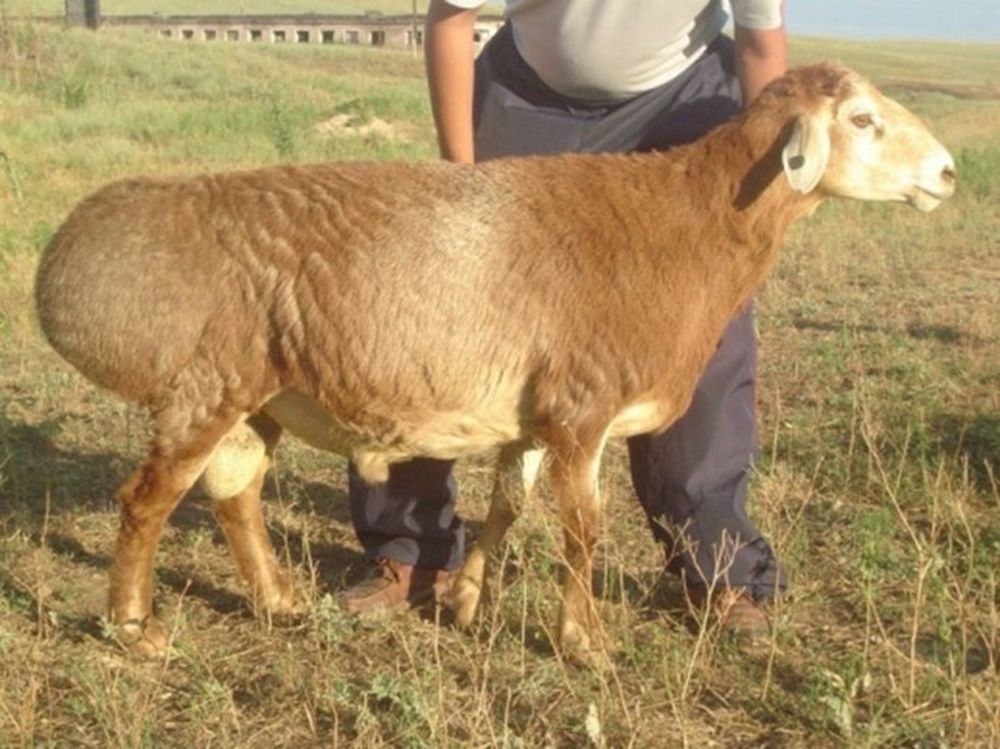
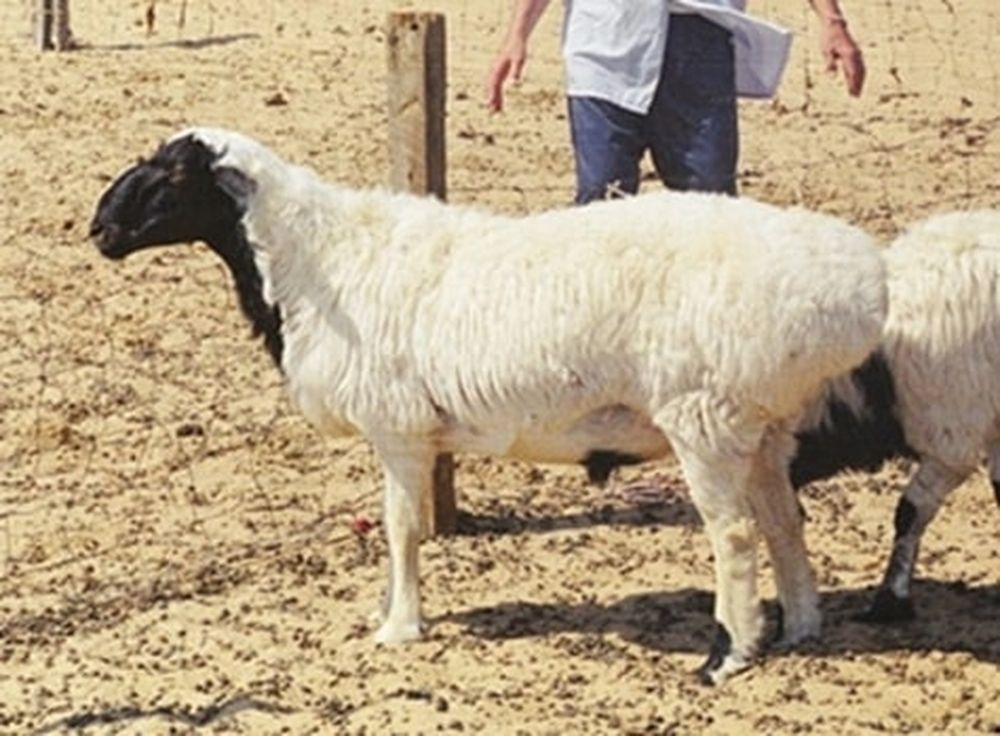
Saryarka Fat-Tailed Coarse-Wool Sheep Breed
The breed was developed in 1999 on the basis of reproductive crossing of sheep of the Kazakh Fat-Tailed Coarse-Wool, Edilbay, and Kazakh Fat-Tailed Semi-Coarse-Wool breeds.
In terms of meat-and-fat productivity, the animals exceed local coarse-wool sheep by 8–10%.
The live weight of breeding rams is 95–110 kg, and that of ewes is 60–65 kg. At 4–5 months of age, ram lambs reach a live weight of 35–38 kg, and ewe lambs 34–36 kg. The carcass weight of lambs is 15–17 kg.
- Factory line of ram No. 5451 with white wool of the Sarysu type of the Saryarka Fat-Tailed Coarse-Wool sheep breed — patent for a breeding achievement No. 192 dated November 21, 2011.
- Factory line of ram No. 4590/5595 with light-grey wool of the Sarysu type of the Saryarka Fat-Tailed Coarse-Wool sheep breed — patent for a breeding achievement No. 193 dated November 21, 2011.
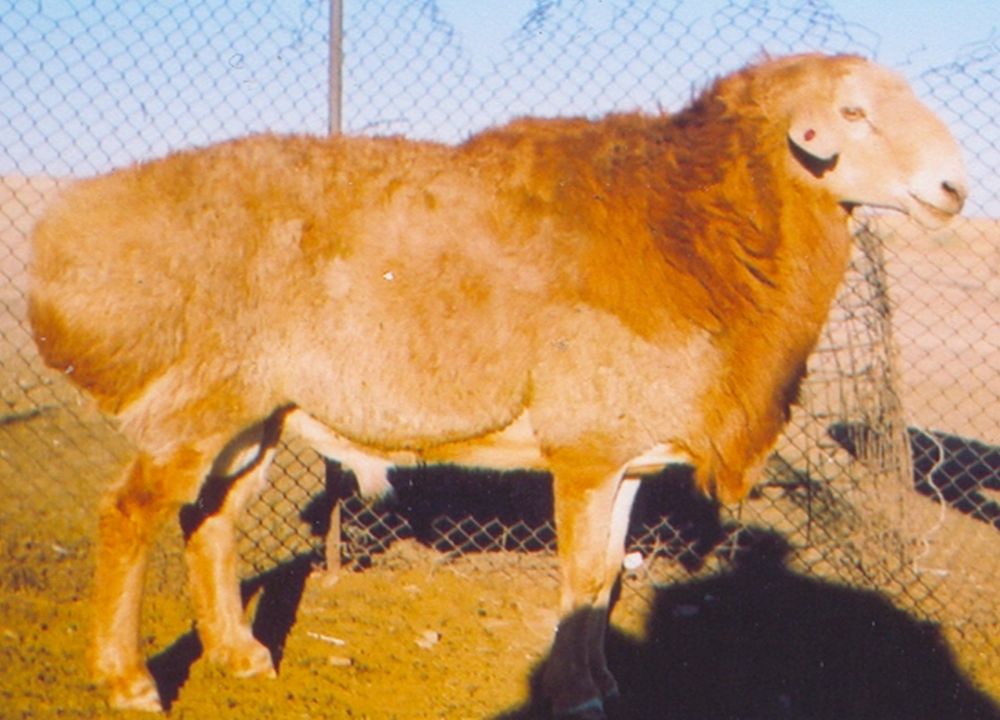
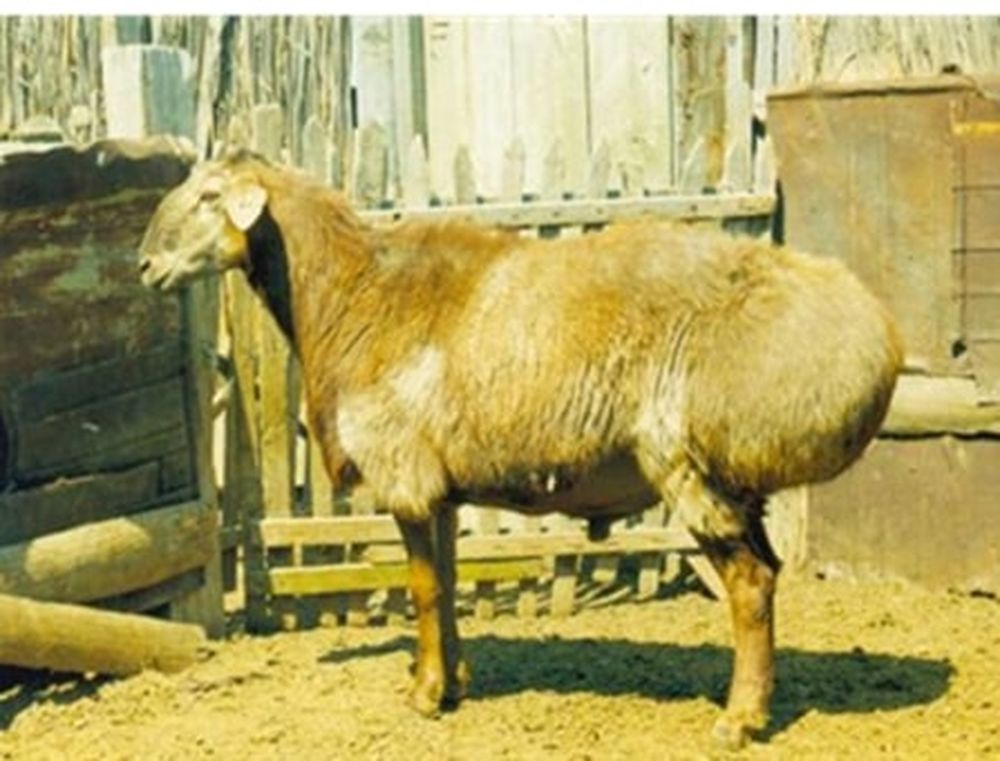
Degeres Fat-Tailed Meat-and-Wool Sheep Breed
The breed was developed in 1980 on the basis of complex reproductive crossing by breeding three-breed crossbreds of the desired type “within themselves” — Kazakh fat-tailed, Shropshire, and Precoce.
The average live weight of rams is 90–100 kg, and that of ewes is 57–63 kg. Wool clip is 4.2–5.4 kg and 2.4–2.8 kg, respectively.
At 4 months of age, ram lambs have a live weight of 32–36 kg, and ewe lambs 30–34 kg. The slaughter yield of 4–5-month-old ram lambs is 50–52%, and the yield of lean meat in the carcass is 79–81%. Fertility is 105–108%.
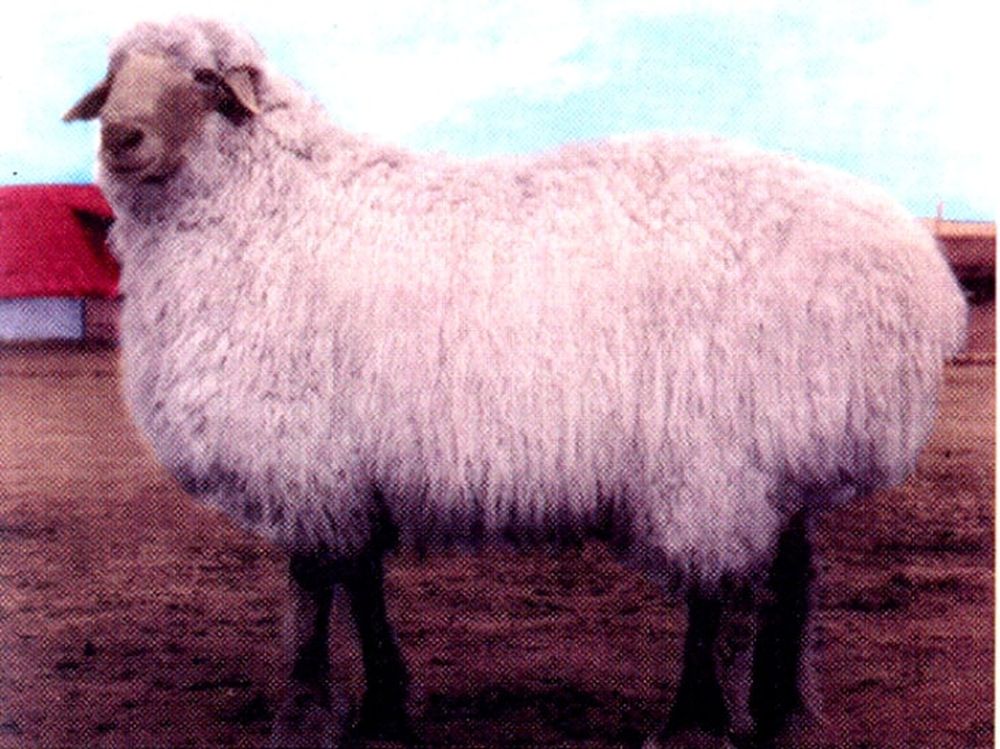
Kazakh Fat-Tailed Semi-Coarse-Wool Sheep Breed
The breed was developed in 1994 by the method of complex reproductive crossing of ewes of the Kazakh Fat-Tailed Coarse-Wool breed with rams of the Edilbay, Sarajin, Tajik, and Degeres breeds.
The live weight of rams is 90–110 kg, and that of ewes is 58–64 kg. At 4 months of age, ram lambs weigh 32–36 kg, and ewe lambs 30–34 kg.
The slaughter yield of young stock is 50–54%, and the yield of lean meat in the carcass is 79–82%. Fertility is 108–112%.
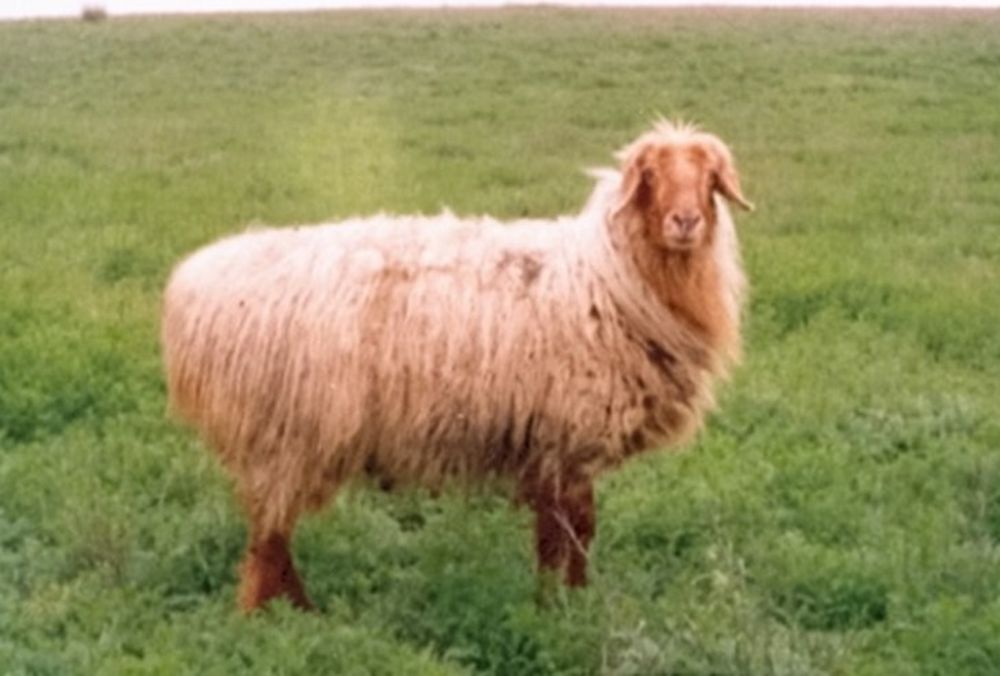
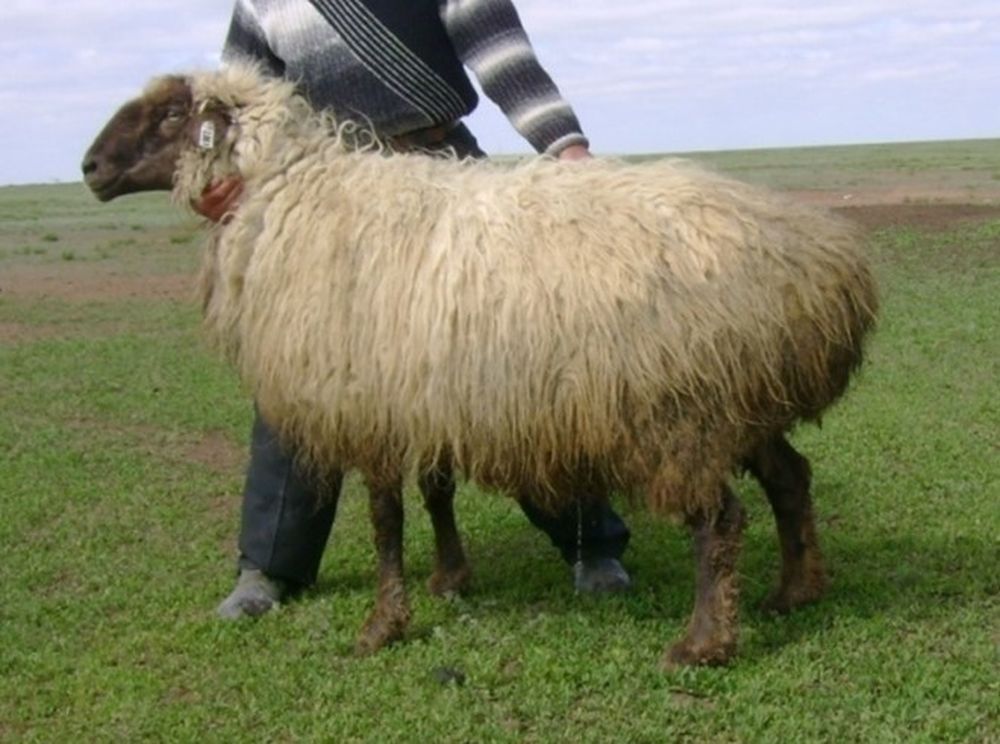
Poultry Farming
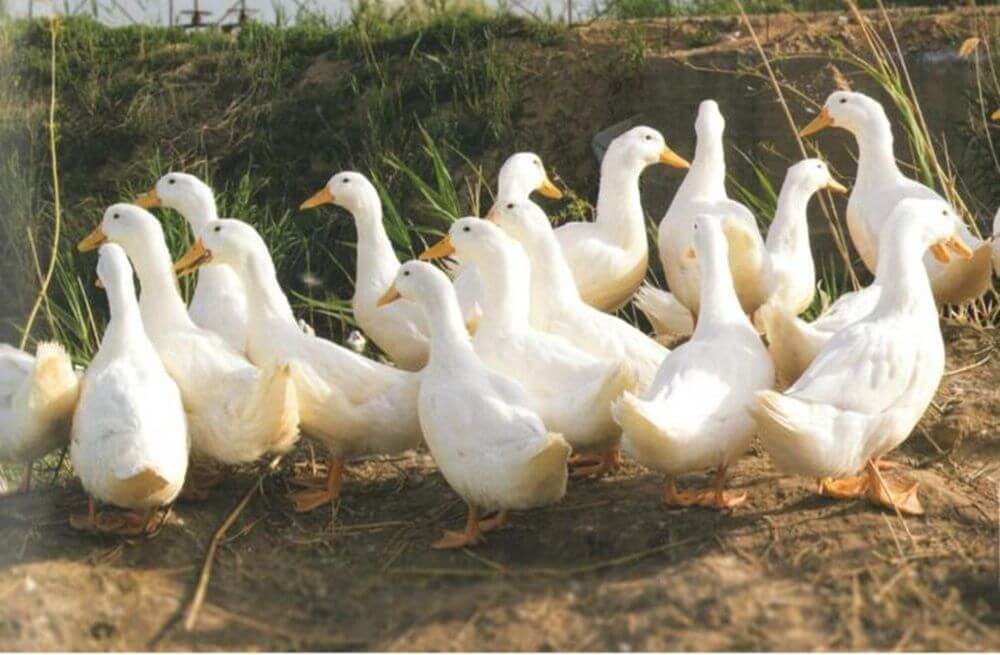
"Medeo" Duck Cross
Authors of the breed: V. Borisov, V. Borisova, N.P. Egorov, A.Ya. Ovsyannikov, L. Schultz, V. Nagibina, D. Kovinko, A. Dudenko, D.K. Moldazhanov, N.V. Kucherenko.
The cross was developed as a result of selection work with X-11 sequences at the Kazakh ZOSP. The cross is two-line: the paternal line is M-1, and the maternal line is M-2.
In terms of productive qualities, the “Medeo” cross is not inferior to the “Cherry Valley” cross. The “Medeo” cross was approved by Order No. 110 of the Ministry of Agriculture of the USSR dated May 23, 1983.
Egg production of the maternal lines is 140–150 eggs per laying duck, and hatchability of young stock is up to 70%. The live weight of broiler ducklings in the 7-week-old age group reaches up to 3 kg.
New Highly Productive "Arman" Cross of Pekin Ducks
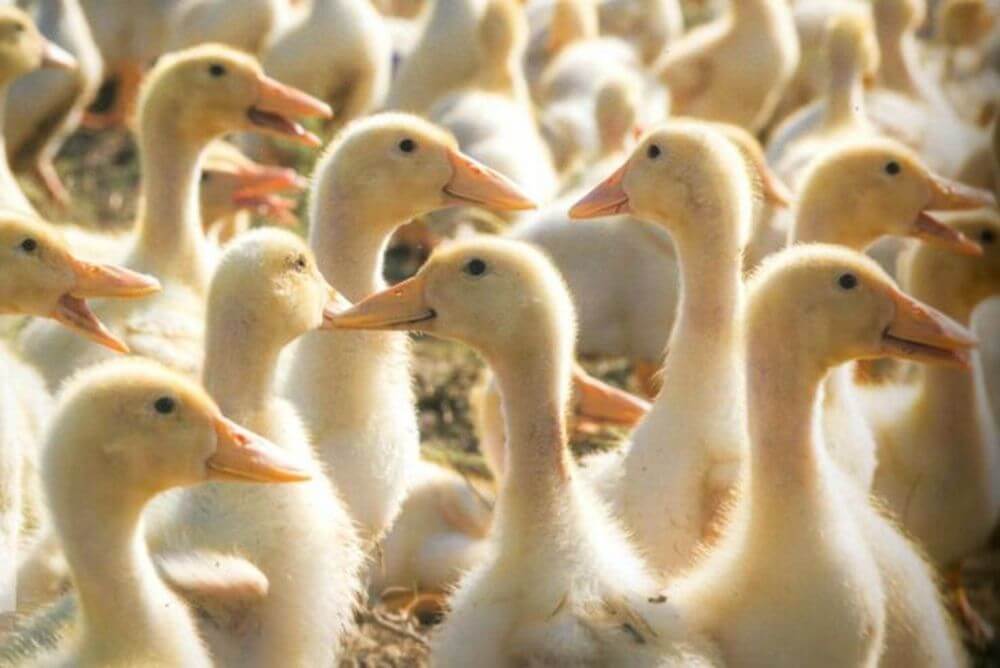
Authors of the breed: V. Borisov, V. Borisova, A. Ovsyannikov, K. Moldazhanov, N.P. Egorov, D.K. Akhmetzhanov.
The cross exceeded the “Medeo” duck cross in all indicators. Meat output per parent pair is 455.3 kg, which is almost 150 kg higher compared with “Medeo”.
The “Arman” cross was approved on February 19, 1999, by Order No. 14 of the Ministry of Agriculture of the Republic of Kazakhstan.
On the basis of the improved “Arman” cross, a domestic duck breed, “Bishkul Colored”, was approved, with the paternal line BC-1 and the maternal line BC-2.
Bishkul Colored Duck Breed
Authors of the breed: K.A. Moldazhanov, K.I. Minzhasov, A.U. Ramazanov, A.A. Torekhanov, S.Sh. Satygul, and others. Patent No. 283 dated March 29, 2013.
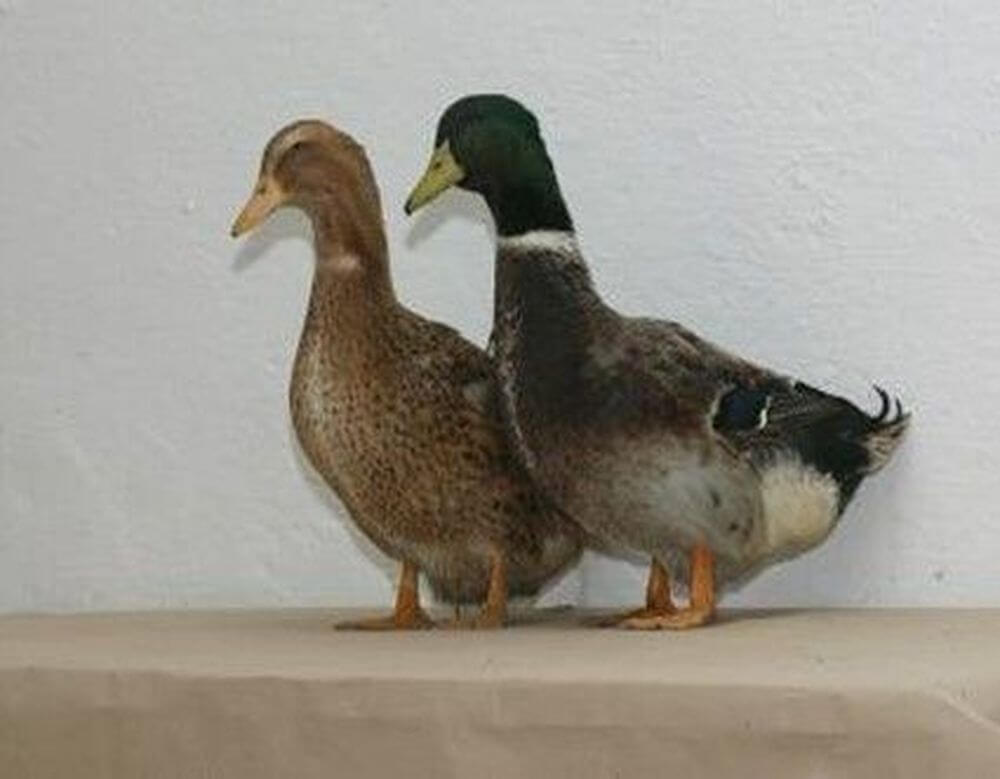
The cross and the breed were developed by selecting ducks with colored plumage from a herd of the White Pekin breed, followed by their reproduction through homogeneous mating with the use of inbreeding at moderate degrees of relationship.
The Bishkul Colored duck breed was developed on the basis of targeted homogeneous selection with the use of inbreeding at moderate degrees of relationship. A type of duck was created that is uniform in plumage color and exterior development and that stably transmits the selected traits to its offspring.
The ducks differ from the “Medeo” and “Arman” crosses in plumage color, as well as in productive qualities: higher egg production of laying ducks and higher live weight of hybrid young stock.
Egg production of the maternal lines is 202.6 eggs per laying duck, and hatchability of young stock is up to 80%. The live weight of broiler ducklings in the 7-week-old age group is 3.4 kg.
Paternal Line of Ducks BC-1
Authors of the breed: Satygul S.Sh., Torekhanov A.A., Bilyalov S.S., Bilyalov E.S., Minzhasov K.I., Moldazhanov K.A., Ramazanov A.U., Ermola N.M., Zhunusov A.I., Ilnitskaya I.V. Patent No. 369 dated January 17, 2008.
Drakes and ducks of the paternal line BC-1 of the khaki type are distinguished by a high growth rate of young stock, which ensures the live weight of the final hybrid at the level of 3.3 kg. The established flock of ducks of the paternal line BC-1 is characterized by uniformity in live weight and productive indicators.
These ducks differ from the “Medeo” and “Arman” ducks bred in Kazakhstan by the higher egg production of laying ducks and the higher live weight of hybrid young stock.
The developed ducks have exterior features characteristic only of them and differ from other breeds in plumage color and reduced fat content in the carcass, while being characterized by high productive and reproductive abilities.
Bishkul Duck Cross (BC-12)
Authors of the breed: Satygul S.Sh., Torekhanov A.A., Bilyalov S.S., Bilyalov E.S., Minzhasov K.I., Moldazhanov K.A., Ramazanov A.U., Ermola N.M., Zhunusov A.I., Ilnitskaya I.V. Patent No. 369 dated January 17, 2008.
Drakes and ducks of the paternal line BC-1 of the khaki type are distinguished by a high growth rate of young stock, which ensures the live weight of the final hybrid at the level of 3.3 kg. The established flock of ducks of the paternal line BC-1 is characterized by uniformity in live weight and productive indicators.
These ducks differ from the “Medeo” and “Arman” ducks bred in Kazakhstan by the higher egg production of laying ducks and the higher live weight of hybrid young stock.
The developed ducks have exterior features characteristic only of them and differ from other breeds in plumage color and reduced fat content in the carcass, while being characterized by high productive and reproductive abilities.
Feed Production
Gene Pool of Forage Crops
In the field of forage crop breeding, 33 new varieties have been developed, 27 of which have been included in the Register of Breeding Achievements of Kazakhstan and recommended for use.
The following varieties have been included in the State Register of Breeding Achievements and approved for use:
wheatgrass “Taukumsky Hybridny” — 1984;
wheatgrass “Progress 85” — 1994; wheatgrass “Tolagay” — 1998; wheatgrass “Talaptan” — 2005; rush-like brittle-spike “Bozoisky” — 1975; Dahurian wildrye “Narynkolsky” — 1991; white-land wormwood “Akzhelen” — 2004; keireuk “Aidarlinsky 1” — 1985; teresken “KLKh-2” — 1990; izen “Almatinsky Peschany 1” — 1985; sainfoin “Almatinsky 2” — 1980; alfalfa “Kapchagayskaya 80” — 1989; alfalfa “Darkhan 90” — 1998; alfalfa “Zhainak 96” — 2003; forage sorghum “Tsunami 85” — 1993; rainfed alfalfa “Maisa” — 2014.
Five new varieties of perennial grasses are undergoing state variety testing: alfalfa varieties for rainfed conditions, “Balausa” and “Abadan”, with a green mass yield of 192 centners/ha, and wheatgrass varieties “Sharapat”, “Kemer”, and “Sabat” for the semi-desert zone, with a green mass yield of 190 centners/ha.
The gene pool of forage crops consists of 5,058 accessions.